
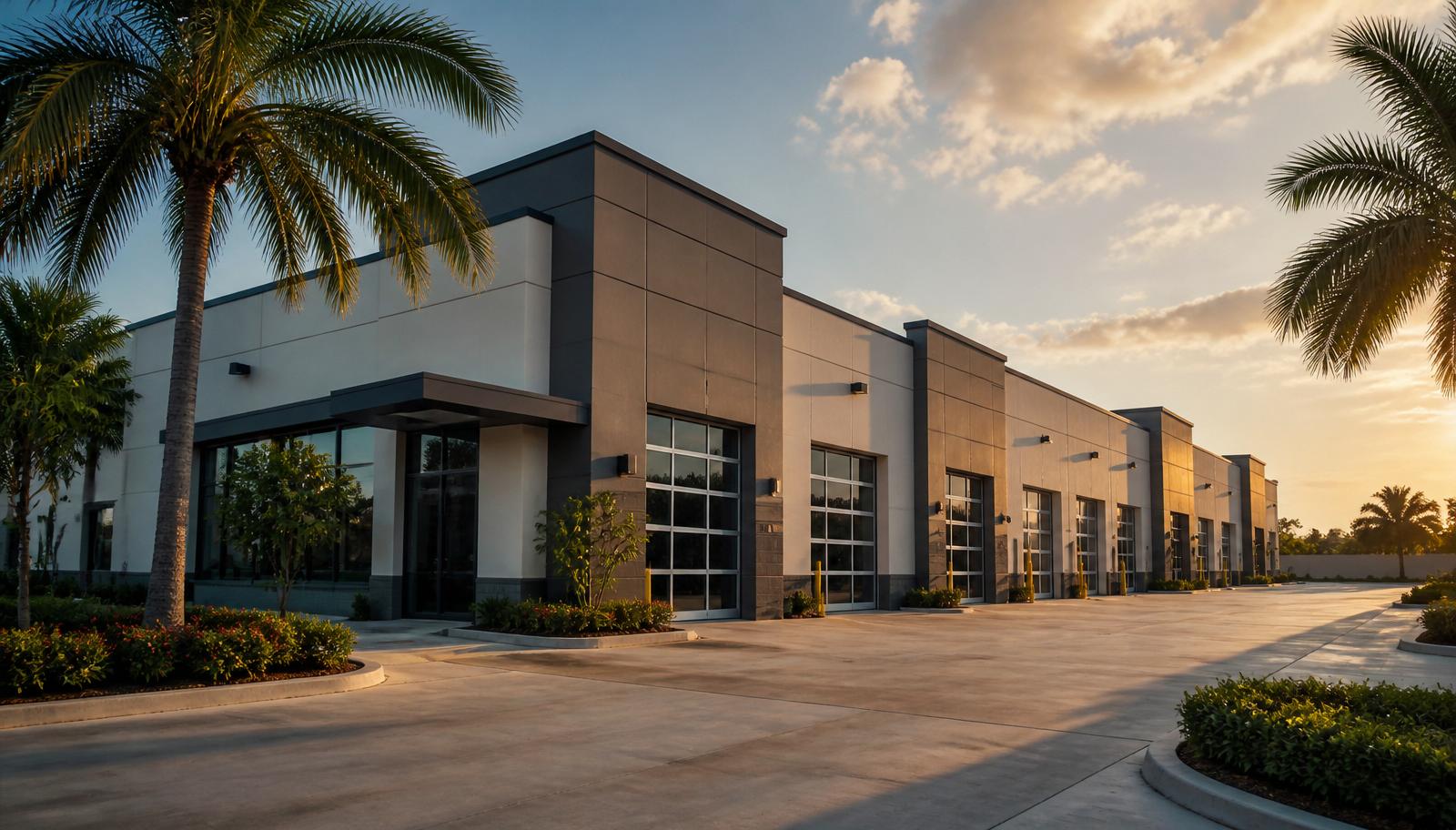
Commercial Real Estate
Liquidation Frameworks for South Florida Automotive Commercial Properties
How South Florida owners of auto repair shops, body shops, and car wash properties can plan a confidential off-market exit that respects environmental, operational, and financial complexity.
Introduction
South Florida's automotive service sector — independent repair shops, body and collision centers, tire and lube facilities, and car wash properties — occupies some of the most functional commercial real estate in Broward, Miami-Dade, and Palm Beach counties. For an owner considering retirement, a partnership transition, or a shift out of daily operations, the underlying real estate can represent significant value even when the business itself is scaling down.
Selling this type of property is rarely a routine transaction. Environmental history, utility capacity, bay layout, and operational continuity all shape how a professional buyer evaluates the asset.
Environmental Due Diligence: What Buyers Actually Review
Environmental due diligence is often one of the most important parts of an automotive-property transaction. Buyers commonly begin with a Phase I Environmental Site Assessment to evaluate historical uses and potential environmental concerns. If the Phase I identifies recognized environmental conditions or additional investigation is warranted, a Phase II assessment involving sampling and laboratory analysis may follow.
Clear records for used oil, hazardous materials, wastewater handling, storage systems, oil-water separators, and previous remediation can help buyers evaluate risk more efficiently. Florida DEP publishes current storage tank compliance guidance, and Broward County maintains environmental compliance resources relevant to automotive facilities.
A property with organized environmental records may support stronger pricing and reduce perceived environmental risk during a buyer's review.
How Buyers Evaluate the Physical Property
Bay count, drive-through vs. drive-in configuration, and interior clear height affect what vehicles and equipment the facility can accommodate. There is no single universal requirement — the appropriate clear height depends on the buyer's intended use.
Electrical service, compressed-air infrastructure, water and sewer capacity, and stormwater management are reviewed. Site layout — drive aisles, parking, vehicle staging, and truck access — often matters as much as the building itself.
A buyer will confirm that the current use is permitted under municipal zoning and that any conditional-use approvals, variances, or grandfathered rights are documented.
Traditional Marketing vs. a Direct Off-Market Sale
Both a broker-led public listing and a direct off-market sale can be appropriate. A public marketing process can expose the property to a wider buyer pool. It may also create operational disruption — employees, vendors, and long-standing customers may become aware of the process, and financial and operational information may need to be shared more broadly.
A direct off-market conversation with a qualified private buyer may reduce exposure to those pressures and may limit some transaction barriers common in financed transactions, such as lender appraisal contingencies. It does not eliminate diligence: whether a buyer accepts environmental, maintenance, or operational conditions depends on underwriting and the final purchase agreement. A qualified cash buyer may support a more predictable or compressed closing timeline, and a transaction structured without a listing broker may avoid brokerage commissions when no broker is involved.
For a broader look, review our guide to selling commercial property off market.
Preparing an Automotive Property for Confidential Review
Assemble trailing twelve-month operating income and expenses, property tax records, insurance policies, site plan, survey, floor plan with bay dimensions, zoning verification, prior Phase I or Phase II reports, storage tank records, hazardous-waste manifests, oil-water separator documentation, equipment inventory, loan payoff information, and known deferred maintenance.
Well-organized records help a buyer evaluate the property efficiently and can materially reduce delays during due diligence.
Evaluate Your South Florida Automotive Property
Use Price Capital Group's cap rate calculator to test how income and market yield may affect an estimated valuation, and submit your property for a confidential evaluation. Submitting a property does not guarantee an offer, approval, or closing. Every transaction is subject to underwriting, due diligence, title review, environmental review, documentation, and final approval.
This article is provided for general informational purposes only and does not constitute legal, tax, environmental, or brokerage advice.
Continue
Submit a Property