
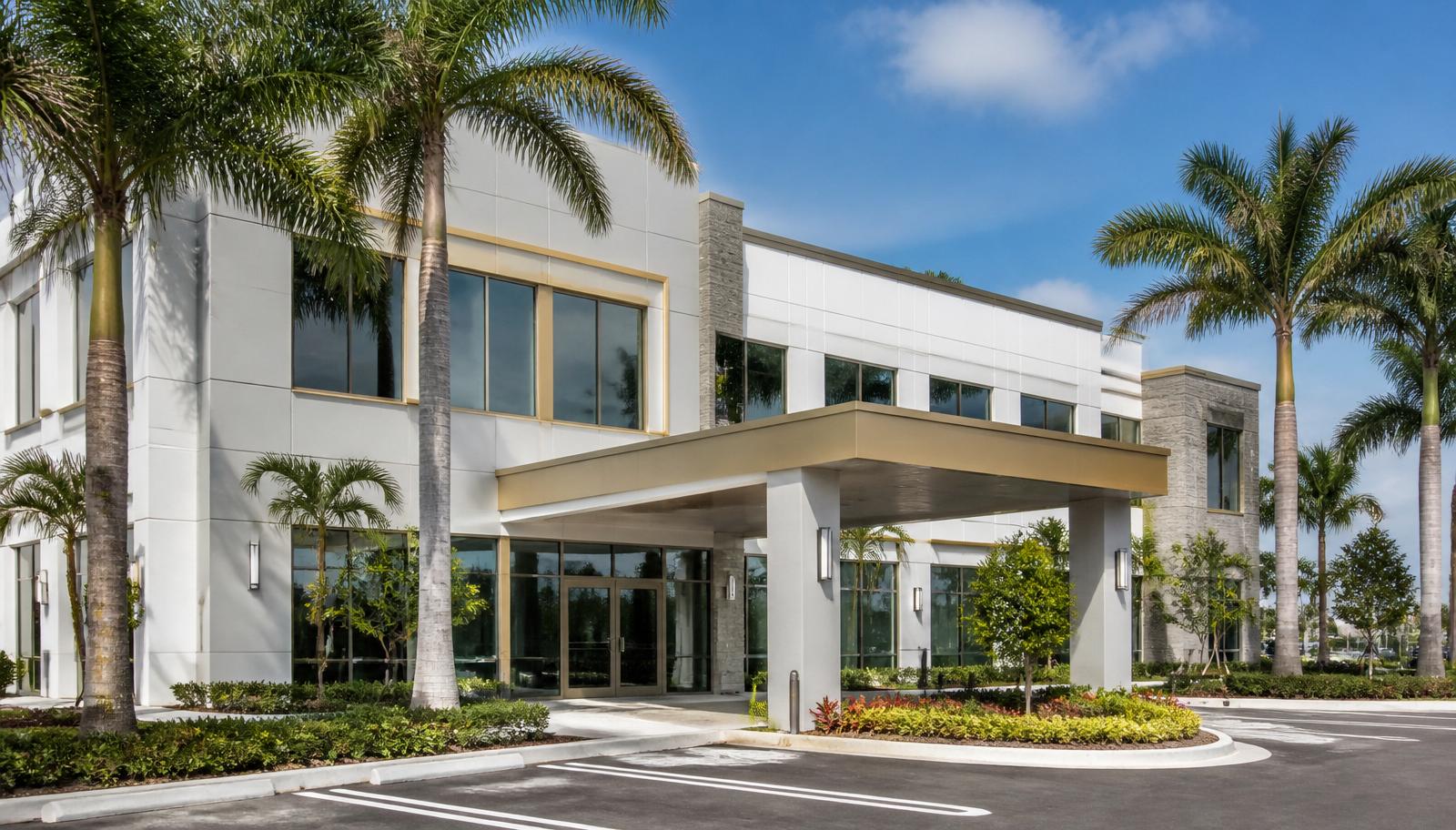
Commercial Real Estate
Liquidation Strategies for South Florida Medical Office Buildings and Healthcare Real Estate
Explore how corporate buyers evaluate South Florida medical office buildings, tenant stability, specialized infrastructure, operating expenses, and confidential off-market sales.
Introduction
Driven by an aging demographic and continuous high-income migration, South Florida's healthcare sector is expanding at an unprecedented rate. For landlords across Miami-Dade, Broward, and Palm Beach counties, owning a Medical Office Building (MOB) has historically been one of the most resilient real estate investments available.
Owning and managing healthcare commercial real estate is also more complex than standard office space. Understanding how corporate acquisition groups underwrite medical properties is essential to a fast, premium off-market cash exit.
Operational Headwinds Squeezing Florida MOB Landlords
Medical infrastructure carries intense carrying costs: reinforced floors for imaging equipment, upgraded HVAC for surgical suites, specialized plumbing for dental practices, and coastal windstorm insurance. Landlords must also stay current with ADA accessibility (see ADA.gov) and Department of Health rules on biohazard disposal and emergency power.
How Institutional Capital Underwrites Healthcare Assets
Tenant retention and stickiness: doctors rarely relocate because build-outs cost hundreds of thousands. Rent rolls anchored by hospital systems or specialty practices command lower cap rates and higher prices.
Heavy value-add repositioning: buyers pay a premium for buildings with three-phase power and plumbing grids that support modernization. On Private Money Lending on The Route: 3 Deals, 3 Answers, we walked through an 18,000 sq ft office we converted from an outdated dental clinic with roughly $200,000 in targeted CapEx.
Measuring the true valuation: Target Valuation = (Base Rent + CAM Reimbursements − Total Operating Expenses) ÷ Market Capitalization Rate.
Bypassing Market Friction with a Direct Cash Sale
Public brokerage listings expose active clinical operations to tours and marketing, raising privacy and HIPAA concerns and disrupting patient care. Bank-financed buyers demand Phase I environmentals and lengthy appraisals; small issues in biohazard storage can stall the loan.
A direct off-market cash sale purchases the asset as-is, eliminates the standard 6% broker commission, protects patient operations, and closes fast. Stress-test with our cap rate calculator, then Submit a Property for a confidential review. For more, see our guide on selling commercial property off market.
Continue
Submit a Property