
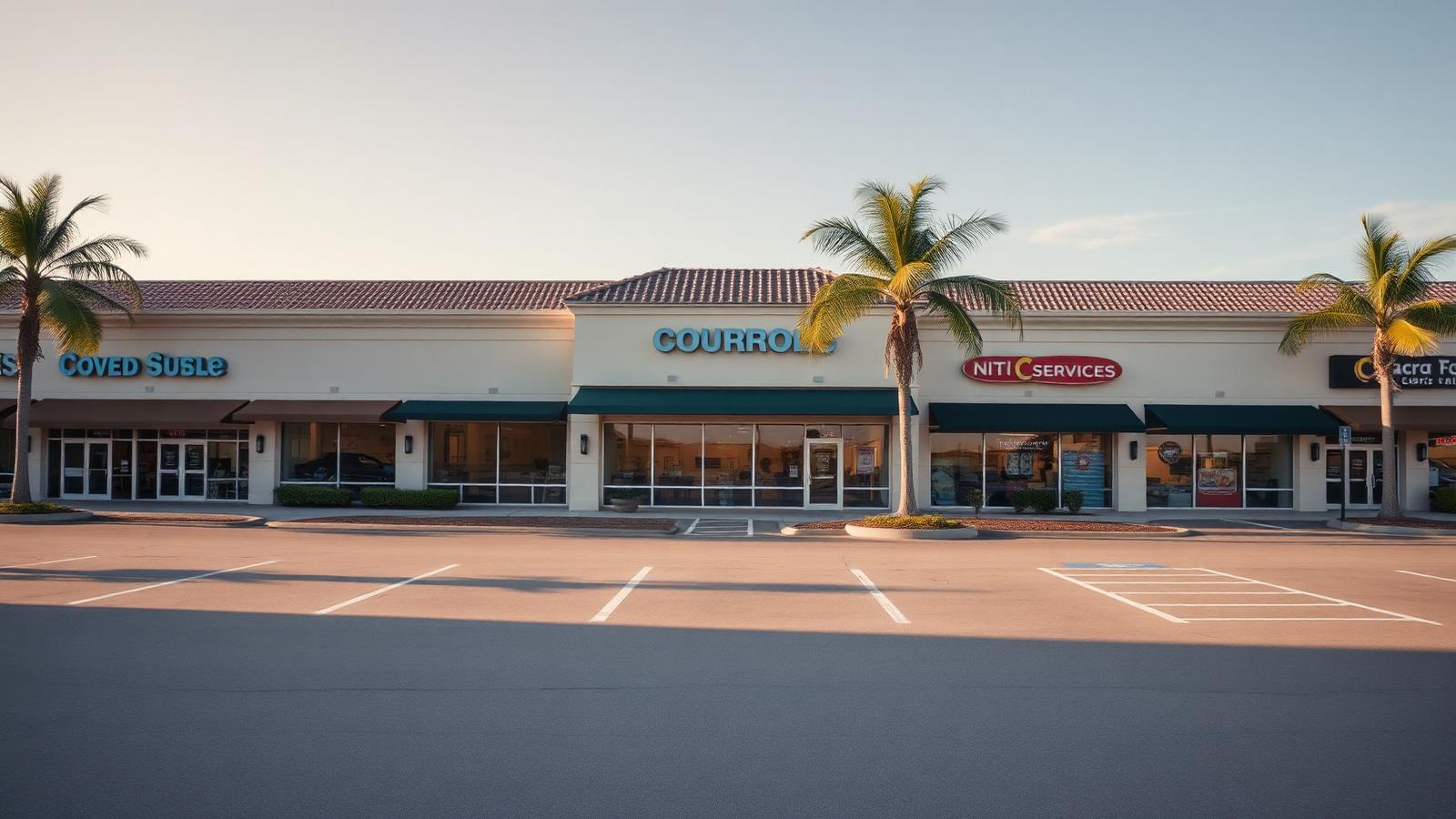
Commercial Real Estate
Liquidation Strategies for Retail Strip Centers and Shopping Plazas in South Florida
South Florida retail landlords face rising insurance costs, CAM friction, tenant turnover, and deferred maintenance. Learn how institutional buyers underwrite strip centers and how an off-market sale may provide a faster, cleaner exit.
Introduction
For decades, owning a neighborhood retail strip center or unanchored shopping plaza in South Florida has been a hallmark of generational wealth. Spanning the corridors of Miami-Dade, Broward, and Palm Beach counties, these properties have historically provided independent landlords with steady cash flow.
Managing retail commercial real estate today is a different enterprise than it was a decade ago. When an owner reaches a point of management fatigue — tenant turnover, retirement, or a 1031 exchange into a passive asset — understanding how corporate acquisition groups underwrite retail plazas can help inform a private, off-market cash exit.
The Operational Headwinds Squeezing Florida Retail Landlords
Operating a multi-tenant retail property in South Florida introduces compounding liabilities. The most severe localized pressure is the escalation of commercial property and windstorm insurance premiums, particularly for older strip centers or those east of I-95 in coastal zones.
Independent owners also carry the administrative burden of NNN lease management and CAM reconciliations. Unexpected capital expenditures — parking-lot repaving, HVAC replacements — must be fronted, then recovered from tenants over time.
How Institutional Capital Underwrites Retail Real Estate
Corporate buyers look far beyond occupancy. A clean rent roll that highlights operational stability and risk can meaningfully influence pricing during a private sale. Industry organizations such as the International Council of Shopping Centers (ICSC) publish research on tenant mix, format, and consumer behavior.
Weighted Average Lease Term (WALT) measures how long income is contractually committed: WALT = Σ (Annual Rent × Remaining Years) ÷ Total Annual Property Rent. A fully occupied plaza on month-to-month leases is typically discounted for turnover risk.
Buyers place a valuation premium on e-commerce-resistant service tenants — medical, restaurant, personal care, fitness — over easily replaceable soft-goods retailers.
Surplus parking or an unutilized outparcel can represent a value-add pad-site development opportunity, subject to entitlements and utility capacity.
The Strategic Advantage of a Direct Off-Market Liquidation
A public listing signals to tenants that the property is changing hands, which can affect renewals and improvements. Traditional financed buyers require exhaustive environmental studies and lender appraisals; a historical concern such as a former dry-cleaning tenant can extend or restructure timelines.
A direct off-market sale to a corporate cash buyer can allow retail plazas to be considered on an as-is basis, subject to the buyer's diligence, may reduce or eliminate listing-broker commissions when no broker is involved, and can support a more compressed timeline. Every transaction remains subject to negotiated documentation, buyer diligence, title review, and final approval.
Evaluate Your Retail Center Position
Test your baseline economic alignment in our interactive cap rate calculator. For a confidential corporate cash review, submit a property to our direct acquisition team. For a broader breakdown, explore our master guide on selling commercial property off market.
This article is provided for general informational purposes only and does not constitute legal, tax, investment, appraisal, or brokerage advice.
Continue
Submit a Property