
Net Lease
The Definitive Guide to Triple Net Leases in Commercial Real Estate
A clear guide to how triple net leases work, what tenants cover, the difference between standard and absolute NNN, and what investors should underwrite before buying.
Triple net leases are one of the most common lease structures in commercial real estate, especially for investors who want predictable income with less day-to-day property management.
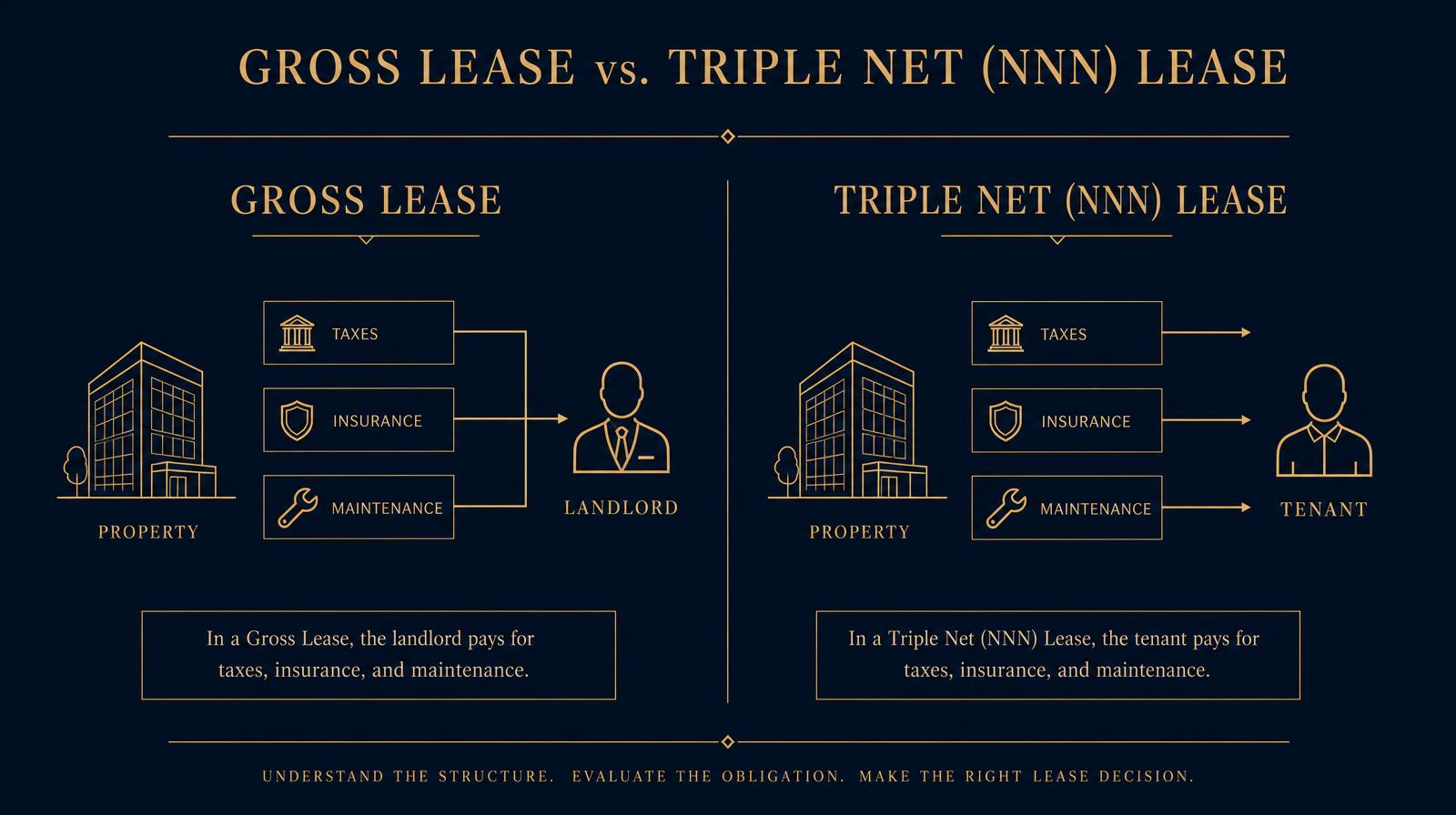
In a triple net lease, also known as an NNN lease, the tenant pays base rent plus the property's major operating expenses. Those expenses usually include property taxes, building insurance, and maintenance.
For commercial property owners, this structure can create cleaner cash flow and fewer management responsibilities. For investors looking at single-tenant retail, medical, industrial, or restaurant properties, understanding how NNN leases work is essential before buying, selling, or exchanging into a net-leased asset.
What Is a Triple Net Lease?
A triple net lease is a commercial lease structure where the tenant pays monthly base rent and also covers three major property expenses:
- Property taxes
- Building insurance
- Common area maintenance and property upkeep
This is different from a gross lease, where the landlord typically collects rent and pays the operating expenses out of that rental income.
With an NNN lease, the tenant takes on more of the building's operating costs. That gives the landlord a more predictable income stream because fewer expenses come out of rent collections.
That is why triple net lease properties are often compared to fixed-income investments. The owner receives rent while the tenant handles many of the costs and responsibilities tied to the property.
What Does a Triple Net Lease Include?
A typical triple net lease separates base rent from the property's operating expenses. The tenant pays rent to the landlord and is also responsible for the expense categories below.

Net Property Taxes
The tenant pays the real estate property taxes assessed by the local municipality or county. This helps protect the landlord from rising tax bills that could reduce net income.
Net Building Insurance
The tenant is responsible for carrying the required property, liability, and hazard insurance coverage for the building. Insurance obligations can vary by lease, so owners and investors should review policy requirements carefully before closing on a net-leased property.
Net Maintenance
The tenant handles routine property maintenance and common area expenses. That can include landscaping, parking lot upkeep, utilities, janitorial services, and other daily operating needs. For landlords, this can meaningfully reduce management friction compared with residential or multi-tenant assets.
Standard Triple Net Lease vs. Absolute Triple Net Lease
Not every NNN lease shifts the same level of responsibility to the tenant.
In a standard triple net lease, the tenant usually handles taxes, insurance, and routine maintenance. The landlord may still be responsible for major structural items, such as the roof, foundation, load-bearing walls, or other long-term capital repairs.
For example, if a warehouse needs a full roof replacement, the landlord may still carry that cost unless the lease clearly assigns it to the tenant.
An absolute triple net lease goes further. In an absolute NNN structure, the tenant is responsible for nearly all property expenses, including structural repairs, capital expenditures, roof replacement, and long-term building obligations.
Absolute NNN leases are often found with national corporate tenants, such as pharmacy chains, dollar stores, quick-service restaurants, and other credit-backed operators.
Why Investors Like Triple Net Lease Properties
Triple net lease properties are attractive because they can offer stable income with fewer management demands. Many NNN assets are leased to a single corporate tenant under a long-term agreement. Lease terms often run 10, 15, or 20 years with scheduled rent increases built in.
For investors seeking passive commercial real estate income, that creates a more predictable ownership experience. Institutional demand for net-leased assets has remained strong, and industry resources like REIT.com track how publicly traded net-lease REITs continue to acquire single-tenant properties at scale.
Common benefits include:
- Reduced landlord operating responsibilities
- More predictable net income
- Longer lease terms
- Potential corporate tenant credit strength
- Lower day-to-day management needs
- Built-in rent escalations in many leases
For owners transitioning out of high-management properties, such as residential rentals or small multifamily assets, NNN properties can offer a simpler long-term ownership model.
Triple Net Lease Risks Investors Should Underwrite
Triple net lease properties can be stable, but they are not risk free.
The biggest risk is tenant concentration. Many NNN properties are single-tenant assets. If the tenant closes, defaults, or files for bankruptcy, the property can go from fully occupied to fully vacant immediately.
That creates several potential issues:
- Loss of rental income
- Re-tenanting downtime
- Tenant improvement costs
- Brokerage and leasing costs
- Specialized building reuse challenges
- Lower property value if the lease is lost
That is why investors should not only underwrite the lease. They should also underwrite the real estate itself.
Location, land value, visibility, traffic counts, building design, market rent, replacement tenant demand, and long-term use flexibility all matter. A strong lease can protect income today, but strong real estate protects downside value if the tenant leaves.
Triple Net Lease Pros and Cons
Pros of Triple Net Leases
Triple net leases can reduce the owner's daily management burden. They can also create cleaner net operating income because taxes, insurance, and maintenance are handled by the tenant.
For long-term investors, NNN leases can make it easier to scale a commercial real estate portfolio without building a large property management operation.
Cons of Triple Net Leases
The main drawback is dependence on the tenant. If the tenant fails, the landlord may face sudden vacancy, re-leasing costs, and possible property repositioning.
Some NNN properties are also highly specialized. A former pharmacy, fast-food building, or medical office may need significant improvements before another tenant can use it.
Investors should also review whether the lease is truly absolute NNN or whether the landlord still carries major capital repair obligations.
When a Triple Net Lease Makes Sense
A triple net lease property may make sense for investors who want stable income, reduced management, and long-term commercial real estate exposure. It can also be useful for owners completing a 1031 exchange who want to move from active property management into a more passive structure.
That said, the best NNN investments are not just about the rent check. They combine strong lease terms, reliable tenant credit, a durable location, and real estate fundamentals that still make sense if the tenant leaves. If you are specifically looking at Florida net-lease assets, our team's NNN property acquisitions page covers what we buy and how we close.
Evaluate Your Commercial Real Estate Position
If you own a net-leased property, the key question is whether the asset still fits your long-term strategy.
You may want to evaluate:
- Current net operating income
- Cap rate based on today's market
- Remaining lease term
- Tenant credit strength
- Upcoming lease rollover risk
- Capital repair exposure
- Alternative use value
- Potential sale or exchange options
Run the numbers with our cap rate calculator to test your property's income alignment against current market pricing.
If you are considering selling or want a confidential review from the acquisitions team, you can submit a property for direct underwriting. For readers interested in private sale strategy, our guide on selling commercial property off market walks through the process in more depth.