
Bridge Financing & Rescue Capital
Resolving Stalled Developments: Utilizing a Commercial Construction Completion Loan for Mid Flight Rescues
How a funding shortfall mid-construction can stall a project, and how completion financing may help a sponsor address unpaid costs, title issues, and the remaining work.
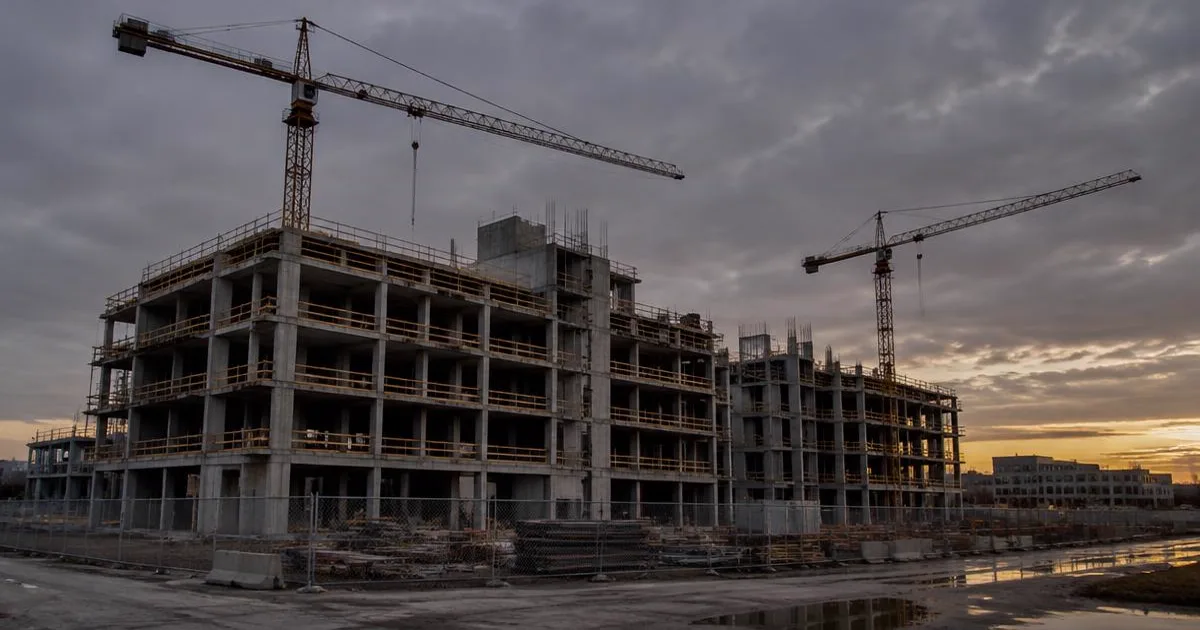
Commercial construction projects can encounter cost overruns or delays caused by labor availability, material pricing, supply-chain issues, design changes, permitting, site conditions, or other project-specific factors. When those pressures exhaust a project's contingency budget before the building is finished, the sponsor can be left with an unfinished structure and a capital stack that no longer covers the remaining work.
Active vertical construction can be one of the most capital-sensitive stages of a development because substantial costs remain while the project may not yet produce operating income. When the budget becomes unbalanced or remaining loan proceeds may be insufficient to complete construction, the lender may suspend draws, require additional equity, modify the loan, establish new funding conditions, or pursue another workout strategy.
A commercial construction completion loan is one possible response. Depending on the project and lender, possible responses may include additional sponsor equity, a senior-loan modification, additional credit, preferred equity, a recapitalization, an asset sale, or private construction completion financing. This article explains how the completion-loan structure generally works and what sponsors should expect from the process.
1. The Anatomy of a Mid-Flight Funding Freeze
A conventional construction loan is typically governed by a Loan to Cost (LTC) ratio: the lender commits to fund a percentage of the total project budget, and the sponsor is expected to fund the remainder as equity. Construction LTC varies according to project type, sponsor strength, market, presales or preleasing, collateral, lender policy, cost basis, and risk.
Illustrative capital-stack example only. On a hypothetical $20,000,000 project, a senior lender at 65% LTC would fund $13,000,000, and the sponsor would be expected to contribute the remaining 35%, or $7,000,000. These figures are not a construction lending standard.
If revised construction costs cause the project budget to exceed committed loan proceeds and required borrower equity, the lender may require the borrower to fund a shortfall or otherwise rebalance the project budget before approving additional draws. In our illustrative example, a $2,000,000 cost overrun would create a funding shortfall the sponsor may be asked to cover with new equity. That figure is hypothetical: actual shortfalls, deadlines, and lender responses vary by transaction and loan document.
A lender may suspend or condition future advances when construction milestones, lien status, borrower-equity requirements, completion funding, or loan-document conditions are not satisfied. The OCC's Commercial Real Estate Lending guidance emphasizes project budget monitoring, remaining funds sufficient for completion, inspections, lien searches, construction progress, draw controls, and cost overruns as core construction-lending controls.
A construction completion loan is a short-term financing or recapitalization structure intended to provide capital needed to complete an unfinished project where the existing capital stack is no longer sufficient. Depending on underwriting and the documents, it may potentially fund an existing lender payoff, approved unpaid construction costs, remaining hard costs, eligible soft costs, contingency, an interest reserve, a completion reserve, or approved closing costs. Not every completion loan covers all of these.
2. Mechanics Liens, Draw Disputes, and Foreclosure Risk
When construction draws slow or stop, the general contractor, subcontractors, and suppliers may go unpaid for completed work. Unpaid contractors, subcontractors, suppliers, or other eligible parties may have mechanics-lien rights depending on applicable state law, contractual relationships, notices, deadlines, and filing requirements.
Mechanics liens can create serious title and priority issues, but whether a construction lien has priority over a mortgage depends on applicable state law and recording chronology. Factors can include when the mortgage was recorded, notice of commencement rules, lien attachment, commencement of work, claimant status, and statutory deadlines. In Florida, for example, 2026 Florida Statutes §713.07 provides that previously recorded encumbrances generally retain priority over later-attaching construction liens, subject to the statute's detailed attachment and priority rules. Florida's rules do not apply nationally, and individual transactions call for construction counsel and a title review.
Even where the senior mortgage retains priority, a lien claim may complicate title, future advances, refinancing, payoff, or foreclosure. Closing a new loan may require liens to be paid, released, subordinated, bonded off, resolved, or otherwise addressed to the satisfaction of the title company and the new lender.
A lender facing an underfunded or defaulted construction project may pursue a workout, an additional funding arrangement, a restructuring, enforcement remedies, or foreclosure depending on the circumstances. Foreclosure or a distressed disposition can result in substantial sponsor losses, but the ultimate recovery depends on property value, lien priority, sale proceeds, guaranties, costs, and the loan documents.
3. The Bridge Capital Recapitalization
An unfinished project with budget overruns, unpaid contractors, title issues, or an existing default can be difficult to refinance through conventional channels, though conventional refinancing is not impossible in every case. Private bridge or completion capital may be one recapitalization option where the project's remaining value, cost to complete, sponsor, collateral, and exit support the transaction. For the related problem of a maturing loan on a transitional asset, see Navigating the Commercial Real Estate Maturity Cliff: Using Bridge Debt for Distressed Recapitalizations.
Private lenders may have underwriting frameworks different from regulated depository banks, but they remain subject to their own credit policies, legal requirements, investor constraints, and transaction documentation. A completion lender may consider current value, as-is condition, cost to complete, as-completed value, stabilized value, sponsor experience, remaining construction risk, market conditions, and exit strategy. Future stabilized value alone does not determine proceeds; the amount of financing supported by underwriting and the approved completion budget governs.
A completion lender commonly requires detailed third-party diligence that may include an engineering or construction review, a site inspection, title and lien analysis, an updated budget, a construction schedule, permits, contractor information, and remaining-cost verification. OCC guidance similarly recognizes engineering inspections, construction monitoring, lien searches, and budget verification as important controls in construction lending.
Where proceeds and negotiated payoff terms permit, completion financing may refinance or pay off the existing lender. A completion lender may also establish a controlled construction reserve based on an approved cost-to-complete budget, though not every completion loan funds 100% of remaining costs. Talk to our team about a commercial construction completion financing scenario.
4. Reaching Completion and Planning the Permanent Exit
A completion loan is generally short-term, tactical capital. The business plan is typically to finish the remaining work, pass final municipal inspections, and obtain a Certificate of Occupancy (CO). A CO is typically issued after the applicable building official determines that the completed building, or the relevant portion, satisfies the requirements for the approved occupancy and other required approvals. A CO does not by itself prove economic stabilization, full tenant occupancy, refinancing eligibility, or construction quality beyond code compliance.
A CO can be a key prerequisite to lawful occupancy, but leasing and tenant operations may also depend on use approvals, tenant-specific permits, licenses, build-outs, fire approvals, and local requirements. Following completion and the required occupancy approvals, the sponsor may begin or continue tenant move-ins according to the lease-up plan. The business plan may target improved occupancy and NOI following completion, but actual stabilization depends on leasing, rents, operating expenses, market demand, and execution.
If the completed property achieves sufficient occupancy, cash flow, collateral value, and other lender requirements, the sponsor may pursue longer-term refinancing to retire the completion loan. A successful completion and refinancing may preserve or improve sponsor equity, subject to total project cost, property value, debt, and market conditions. The process discipline discussed in The Discipline Loop: Why Your Process Beats Your Goals is relevant to keeping the construction budget, the lien resolution, and the exit plan aligned.
Price Capital Group evaluates real estate backed financing opportunities involving transitional and complex commercial properties based on collateral, project status, leverage, sponsor liquidity, cost to complete, title condition, construction risk, and exit strategy. Test valuation assumptions with our cap rate calculator; it does not determine loan eligibility. If you are facing a funding shortfall, unpaid project costs, or a suspended draw, Submit a Property for a confidential financing review.
Related Reading
- Navigating the Mid-Flight Crisis: Commercial Rescue Capital for Stalled South Florida Construction Projects
- Navigating the Commercial Real Estate Maturity Cliff: Using Bridge Debt for Distressed Recapitalizations
- The Art of the Discounted Payoff (DPO): Using Bridge Capital to Erase Commercial Real Estate Debt
General educational information only, not legal, tax, accounting, lending, or investment advice. Construction lending, lien priority, draw administration, remedies, and financing depend on the documents, jurisdiction, borrower, and transaction. Consult qualified construction counsel, a title professional, and a CRE advisor. No funding, lien resolution, completion timeline, Certificate of Occupancy, or refinancing outcome is guaranteed.