
Construction & Rescue Capital
Navigating the Mid-Flight Crisis: Commercial Rescue Capital for Stalled South Florida Construction Projects
How a construction loan falls out of balance, how commercial rescue capital may be structured, and why the Certificate of Occupancy is the milestone that matters.
Developing commercial real estate in South Florida involves real operational friction. Commercial construction in South Florida can face weather, supply-chain, permitting, labor, and inspection delays. Even experienced sponsors can see a schedule slip by months.
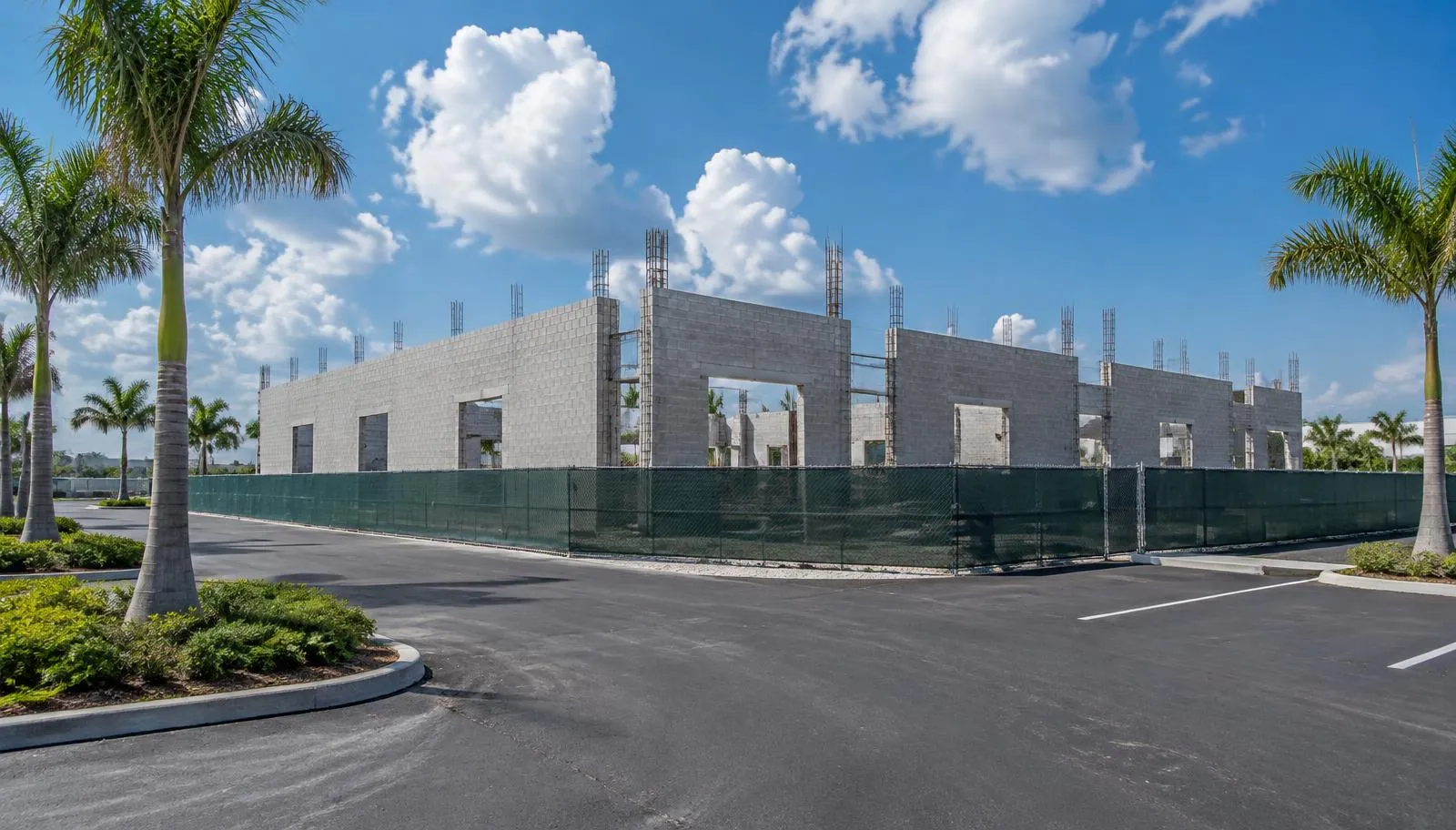
Consider a multi-tenant retail plaza repositioning or a small-bay warehouse development that falls six months behind schedule. When a project falls materially behind schedule, additional carrying costs and change orders can create a funding gap in the construction budget. Contingency reserves may be used up, and unpaid contractors may begin to raise lien concerns.
At that point, the construction lender may enforce the conditions in its loan documents and stop funding further draws. Work slows or stops, and the project enters what developers call a "mid-flight crisis." Some sponsors facing this situation look to specialized short-term commercial bridge debt, often called commercial construction rescue capital, to recapitalize the project and reach the Certificate of Occupancy (CO). This guide explains how that process can work and where its limits are.
1. The Mechanics of an "Out of Balance" Bank Loan
To understand why a construction loan can stall mid-project, it helps to understand how construction loans are structured. A lender does not simply hand a developer the full loan amount at closing. Construction loans commonly fund through periodic draws tied to completed work, inspections, approved budgets, lien documentation, and other lender requirements. The lender typically funds a portion of total project cost, measured as Loan-to-Cost (LTC).
Illustrative LTC example
In an illustrative example, a lender might fund 65% of total project cost, with the sponsor contributing the remaining 35% as equity. Loan-to-Cost requirements vary by lender, property type, sponsor, project risk, market conditions, and capital structure.
Now suppose a hurricane delays roof installation by three months. The developer incurs roughly ninety days of unbudgeted carrying costs, such as interest, property taxes, insurance, and site security. If structural steel prices rise during that delay, the general contractor may also submit a significant change order.
A construction loan can become "out of balance" when the lender determines that remaining committed loan proceeds plus required borrower equity are insufficient to complete the project in accordance with the approved budget.
If a lender determines that a construction loan is out of balance, the loan documents may permit the lender to suspend future advances until the borrower restores the required balance or satisfies other conditions. The borrower may be required to contribute additional equity or otherwise cure the funding deficiency before further advances are made. Actual remedies depend on the loan documents.
If the sponsor cannot cure the gap, the project can stall. Subcontractors may leave the site, and unpaid contractors or subcontractors may assert construction-lien rights subject to applicable law and project circumstances. Florida's construction lien law is found in Chapter 713, Florida Statutes, and notice, deadline, and priority questions should be reviewed with qualified Florida counsel. In a prolonged default, the lender may pursue the remedies available under its loan documents, which can include foreclosure.
2. Enter Commercial Rescue Capital
Once a lender has frozen draws, finding replacement financing is harder. A partially completed project with title issues, liens, cost overruns, or a distressed existing loan may be difficult to refinance through conventional channels, because a new lender must evaluate completion risk and existing creditor claims.
Sponsors in this position may consider several paths: new partner equity, a negotiated workout or modification with the existing lender, a sale of the project, or commercial rescue capital. Private rescue financing may be structured as short-term bridge debt designed to address payoff, completion, carry, and project-stabilization needs, subject to underwriting.
Rescue lenders may evaluate both the current collateral position and the projected value at completion, along with remaining cost, sponsor capability, construction status, title, liens, permits, contracts, and the exit strategy. Projected completion or stabilized value can be an important underwriting metric, but it does not replace review of current value, budget, cost-to-complete, execution risk, and legal status. Lenders also commonly review the general contractor, and Florida contractor licensing can be checked through the Florida Department of Business and Professional Regulation.
A rescue transaction may refinance or pay off the existing construction lender where sufficient proceeds and payoff arrangements are available. Closing may require mechanic's liens and other title matters to be paid, released, bonded, subordinated, insured over, or otherwise resolved in a manner acceptable to the lender and title company. Actual procedures depend on the facts and applicable law.
A rescue lender may establish a controlled construction or CapEx reserve to fund approved remaining project costs through future draws. A reserve funds the approved budget; it does not guarantee completion, fix the final cost, or ensure contractor performance.
If your project is facing a draw freeze or cost overrun, talk to our team about rescue financing for a stalled commercial project.
3. Structuring the Rescue Capital Stack
Because a rescue lender is stepping into a project with existing execution risk, it typically requires structural protections.
The Interest Reserve
A project under construction may produce little or no operating income before completion or lease-up. An interest reserve can be established to fund scheduled interest during a construction or stabilization period. An interest reserve may be funded at closing or through loan proceeds, depending on the structure.
Illustrative financing example only
On a $5,000,000 loan at an illustrative 10% annual interest rate, annual interest is about $500,000, or roughly $41,667 per month. A twelve-month reserve would therefore be sized at roughly $500,000. These figures are not Price Capital Group pricing, and rescue loans are not all priced similarly.
Not every lender uses an interest reserve, and release of reserve funds is governed by the loan documents. A reserve can ease monthly cash-flow pressure, but it does not remove the borrower's obligations or cash-flow risk, and it can be depleted if the schedule slips further.
Lower Leverage to Offset Completion Risk
Illustrative lower-leverage rescue structure
In an illustrative structure, rescue financing might be sized at 60% to 65% of After Repair Value (ARV), meaning the projected value of the property upon completion or stabilization. Available leverage varies based on current value, completion value, cost to complete, sponsor equity, title, lien position, project status, and exit strategy. Lower leverage generally means the sponsor keeps more of its original equity in the project.
As Jason discusses in Why Small Businesses Fail Before They Even Start, flexibility and the willingness to accept short-term pain often separate businesses that survive from those that do not. A higher-cost rescue loan may be economically justified in some cases if it preserves a viable project, but the sponsor should compare the cost of rescue financing with other restructuring, equity, sale, and workout alternatives.
4. Driving to the Certificate of Occupancy
A rescue bridge loan is not permanent financing. Rescue financing is generally short-term, with actual maturity and extension options determined by the loan documents.
Illustrative short-term range only
As an illustration, a rescue term might run 12 to 18 months. The central goal during that period is to complete construction and reach the Certificate of Occupancy.
For many construction projects, obtaining a Certificate of Occupancy or equivalent final approval is an important step toward occupancy, lease-up, stabilization, and permanent financing. Following the process principles in The Discipline Loop: Why Your Process Beats Your Goals, the sponsor needs to manage contractors closely, finish the punch list, and secure final municipal sign-offs.
After completion and occupancy approval, construction risk may decline substantially, but lease-up, operating performance, warranty issues, tenant improvements, final punch-list work, and market risk may remain. Once the property is completed and demonstrates sufficient operating performance, the sponsor may pursue longer-term refinancing, subject to lender requirements and market conditions. Longer-term financing may become available if the asset and borrower meet underwriting requirements.
Before entering rescue financing, the sponsor should understand the intended completion plan and repayment path. Possible exits may include a permanent refinance, a sale, a recapitalization, new partner equity, or another repayment source.
Price Capital Group evaluates real estate backed financing opportunities involving stalled or transitional commercial projects based on the property, sponsor, cost to complete, leverage, title position, remaining construction scope, and exit strategy.
To test how your project's projected stabilized figures may look, try our cap rate calculator. If you are facing a frozen draw account, lien issues, or a serious timeline problem, Submit a Property to discuss a construction completion or bridge financing scenario with our team. Any financing is subject to underwriting, and terms, timing, and approval are not guaranteed.
Related Reading
- Rescuing Distressed Assets: How South Florida Investors Use Short-Term DSCR Bridge Loans
- Financing 40-Year Recertification Repairs: How South Florida Commercial Owners Use Bridge Loans to Save Their Buildings
- Bypassing the Bank: Hard Money vs. DSCR Bridge Loans in South Florida
- Winning the Bidding War: The "Bridge-to-SBA" Strategy for South Florida Owner-Operators
This article is general educational information and does not constitute legal, tax, lending, or investment advice. Figures are illustrative. Loan terms, rates, reserves, leverage, timelines, and approval are subject to underwriting and vary by lender, property, and borrower. Construction lien rights and procedures depend on the facts and applicable Florida law. Consult qualified advisers before any financing or restructuring decision.