
Bridge Financing & Private Debt
Financing 40-Year Recertification Repairs: How South Florida Commercial Owners Use Bridge Loans to Save Their Buildings
A repair-financing framework for aging commercial buildings, from post-repair valuation and construction reserves to refinancing or selling.
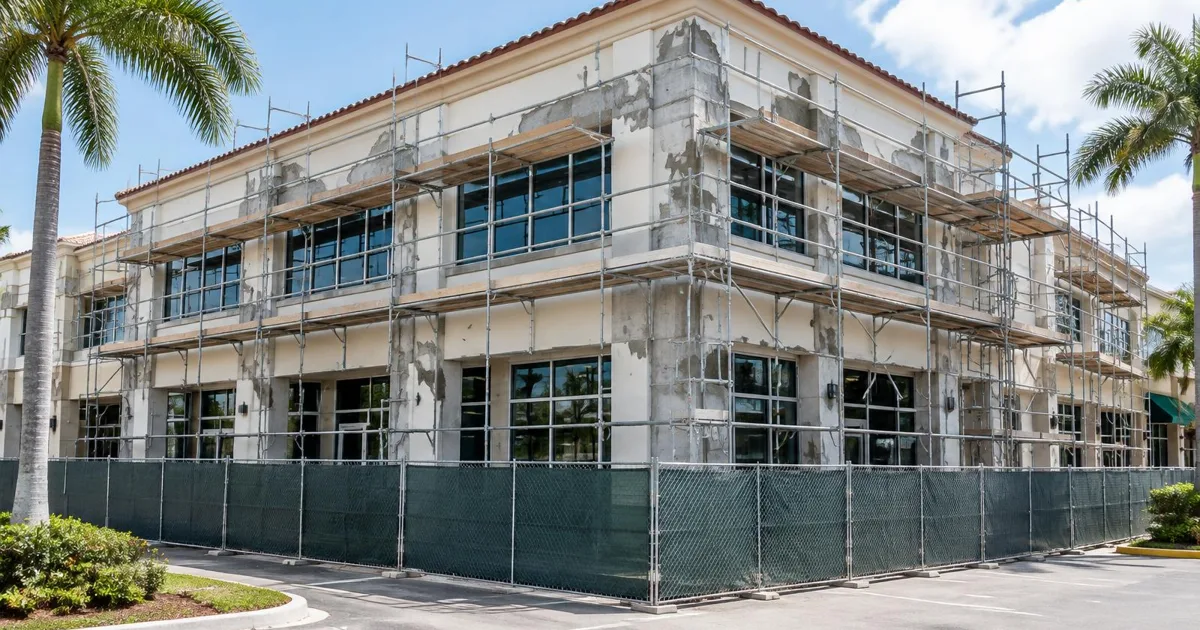
Across Miami-Dade, Broward, and Palm Beach counties, owners of aging retail plazas, small-bay industrial warehouses, and mid-rise office buildings can face substantial building-safety and repair obligations. Receiving an inspection or recertification notice can create a difficult capital decision when reserves are insufficient and the building still supports an operating business or rent roll.
“40-year recertification” remains a familiar historical term, but it is not a uniform current rule throughout South Florida. Miami-Dade County's Building Recertification program now uses schedules that vary by building category, age, and coastal location. Broward uses its Building Safety Inspection Program. Owners in Palm Beach County should confirm applicable state and municipal inspection requirements with the responsible building official rather than assume the same countywide schedule applies. Florida milestone inspections apply to certain condominium and cooperative buildings, not every commercial property.
Miami-Dade describes a notice of required building recertification. This article does not use “Notice of Required Inspection” or NORI as a universal South Florida notice title. The property's actual notice, jurisdiction, engineer, and building official should guide the required work and timing.
Structural and electrical evaluations may uncover concrete spalling, corroded reinforcing steel, compromised roof components, or outdated electrical systems. Major structural, roofing, electrical, or concrete-restoration work can require substantial capital depending on the scope, building size, engineering findings, contractor pricing, and permitting.
Failure to satisfy required building-safety or code obligations can result in enforcement actions that may restrict occupancy or use, depending on the violation and jurisdiction. That possibility makes both construction funding and continuity of rental income important. A commercial bridge loan in South Florida may be one option for addressing the funding gap, but it is not a guaranteed rescue.
1. The Conventional Bank Trap: Why Traditional Lenders Freeze
When an owner receives a large contractor estimate, a cash-out refinance or commercial line of credit may seem like the natural first step. In an otherwise financeable property, borrowing against equity can fund improvements without requiring a sale. Unresolved structural work, however, can change how a lender evaluates that collateral.
Open structural violations, unresolved building-safety issues, major deferred maintenance, or uncertain occupancy can make conventional financing more difficult because lenders may view the collateral and cash flow as higher risk. A Property Condition Report may identify work that needs to be completed, reserved for, or addressed as a condition of financing. An open violation does not automatically mean every bank will decline.
Some banks may apply tighter commercial real estate underwriting because of portfolio concentration limits, regulatory expectations, capital requirements, or internal credit policy. Construction complexity can add another layer: lenders may assess the repair budget, permits, insurance, contractor qualifications, and the owner's capacity to absorb overruns.
Debt Service Coverage Ratio requirements also depend on reliable income. If safety issues could disrupt occupancy, underwriting may discount uncertain rent or require additional reserves. An owner can therefore have meaningful equity yet struggle to access enough conventional debt to complete the repairs. The financing question is not just what the building is worth, but whether its current condition and operating profile fit the lender's program.
2. The Hard Money Solution: Underwriting the Post-Repair Value
Real estate backed bridge financing can provide short-term capital for a property undergoing repairs or transition, subject to underwriting, collateral, sponsor strength, construction scope, and exit strategy. Some private lenders, often described as hard money lenders, consider projects that fall outside conventional bank programs.
Some bridge lenders consider the property's projected stabilized or post-repair value in addition to its current condition, borrower strength, leverage, construction budget, and exit strategy. After Repair Value (ARV) describes an estimate of value after the planned work, not a guaranteed future appraisal.
This is a simplified conceptual framework, not an appraisal methodology. Repair cost does not necessarily create an equal amount of market value. Successful completion of material repairs may improve marketability, insurability, occupancy, and financing prospects, which can support a stronger valuation depending on market conditions.
A lender must still evaluate whether the budget and execution plan are credible. A sixty to sixty-five percent ARV loan is an illustrative leverage range, not a fixed Price Capital Group term or an industry standard. Available leverage varies by lender, property condition, repair scope, sponsor, market, and exit strategy.
As discussed in Why Small Businesses Fail Before They Even Start, operational flexibility matters when capital is constrained. Lower leverage may provide a lender with a greater collateral cushion and can improve execution certainty, but funding remains subject to underwriting and closing requirements. Owners still need cash for equity, contingencies, and costs outside the loan budget. Talk to us about bridge financing for structural repairs.
3. Structuring the Capital: Interest-Only Payments and CapEx Holdbacks
Repair financing often separates acquisition or refinancing proceeds from construction funding. A lender may hold back a portion of loan proceeds for repairs and release funds through a draw process as documented work is completed. Construction reserves, Capital Expenditure (CapEx) holdbacks, or escrowed repair funds help control how the repair budget is deployed; programs do not all use the same structure.
Depending on the transaction, a new bridge lender may refinance existing debt and require an agreed lien position. Lien priority depends on title, existing obligations, intercreditor arrangements, loan structure, and closing documents. Paying off a senior loan and taking a first lien is one possible structure, not a universal requirement.
For a typical repair holdback, the contractor completes a documented phase of work and the borrower submits a draw request. The lender may arrange an inspection and review the supporting documents before releasing approved funds. Repair holdbacks often use documented draw procedures, which may include contractor invoices, inspections, lien waivers, permits, and lender approval. Lender inspections are not a substitute for required government inspections.
Many bridge loans use interest-only payment structures during the term, although amortization and payment structures vary. For a facility that charges simple annual interest on a funded balance, a simplified monthly estimate is:
The formula excludes fees, reserves, principal amortization, and day-count adjustments. Some construction or repair facilities charge interest on funded or drawn balances, while others may have different accrual or reserve structures. The loan documents control. Borrowers should confirm how interest on holdbacks is calculated and whether they must fund contractor costs before reimbursement.
This structure may help align debt service and construction funding, but it does not eliminate default risk. Permit delays, cost overruns, slower draws, or tenant disruption can still strain liquidity. A realistic contingency and operating reserve remain important.
4. Executing the Exit Strategy: Refinance or Liquidate
Bridge debt is tactical capital and is often more expensive and shorter-term than conventional bank financing. A twelve-to-twenty-four-month maturity is an illustrative structure, not a universal term. Rates, fees, leverage, maturity, extension options, and payment structure vary by lender and transaction. A balloon maturity may require repayment of the remaining principal at the end of the term.
Following the discipline discussed in The Discipline Loop: Why Your Process Beats Your Goals, repayment planning should begin before closing. The borrower should understand how the bridge loan is expected to be repaid, refinanced, or otherwise resolved, including what happens if construction or lease-up takes longer than expected. Our guide to commercial mortgage balloons and bridge financing explores maturity risk in more detail.
After required repairs are completed and the appropriate authority accepts the required reports or compliance work, the owner may consider two principal exit paths. Repair completion alone does not guarantee that the asset is financially stabilized.
- Conventional Refinance: Once required repairs are complete and the property has a stronger operating profile, the borrower may seek longer-term refinancing, subject to lender requirements and market conditions. A stable rent roll, adequate debt coverage, insurance, valuation, and sponsor qualifications still matter. Bank or CMBS financing is not guaranteed simply because compliance issues have been resolved.
- Retail Sale: An owner who prefers not to keep managing the property can consider an open-market sale. A property with completed repairs and resolved compliance issues may be more marketable, but pricing depends on income, condition, location, lease profile, capital markets, and buyer demand. Sale proceeds must cover the bridge payoff and transaction costs before any remaining equity reaches the seller.
Bypassing the Friction with a Direct Cash Sale
For some legacy owners, borrowing for a major repair program and managing contractors is not the preferred path. The decision should weigh the expected value after repairs against funding costs, construction risk, time, and the owner's willingness to remain involved.
A direct acquisition may provide another option for an owner who prefers to sell rather than fund and manage the repairs. Transaction terms remain subject to diligence, title, property condition, regulatory issues, pricing, and the purchase agreement. A buyer's willingness to accept an existing condition does not automatically transfer every violation or engineering liability away from the seller. Brokerage commissions and transaction costs are negotiated and vary.
Price Capital Group evaluates real estate backed financing and acquisition opportunities based on the property, capital need, repair plan, transaction structure, and exit strategy. For more on private transactions, explore our guide to selling commercial property off market.
To evaluate income-based value under your current assumptions, try our cap rate calculator. It does not replace an appraisal or structural assessment. If you are facing a building-safety repair requirement and want to evaluate bridge financing or a potential sale, discuss your commercial repair financing scenario with our team for a confidential review. You can also Submit a Property with your repair plan and capital needs.
Related Reading
This article provides general educational information, not legal, tax, lending, engineering, or investment advice. Formulas and ranges are illustrative. Financing is subject to underwriting and loan documents. Building inspection, recertification, repair, and enforcement requirements vary by jurisdiction and building type. Confirm current requirements with the responsible building official and qualified professional advisers.