
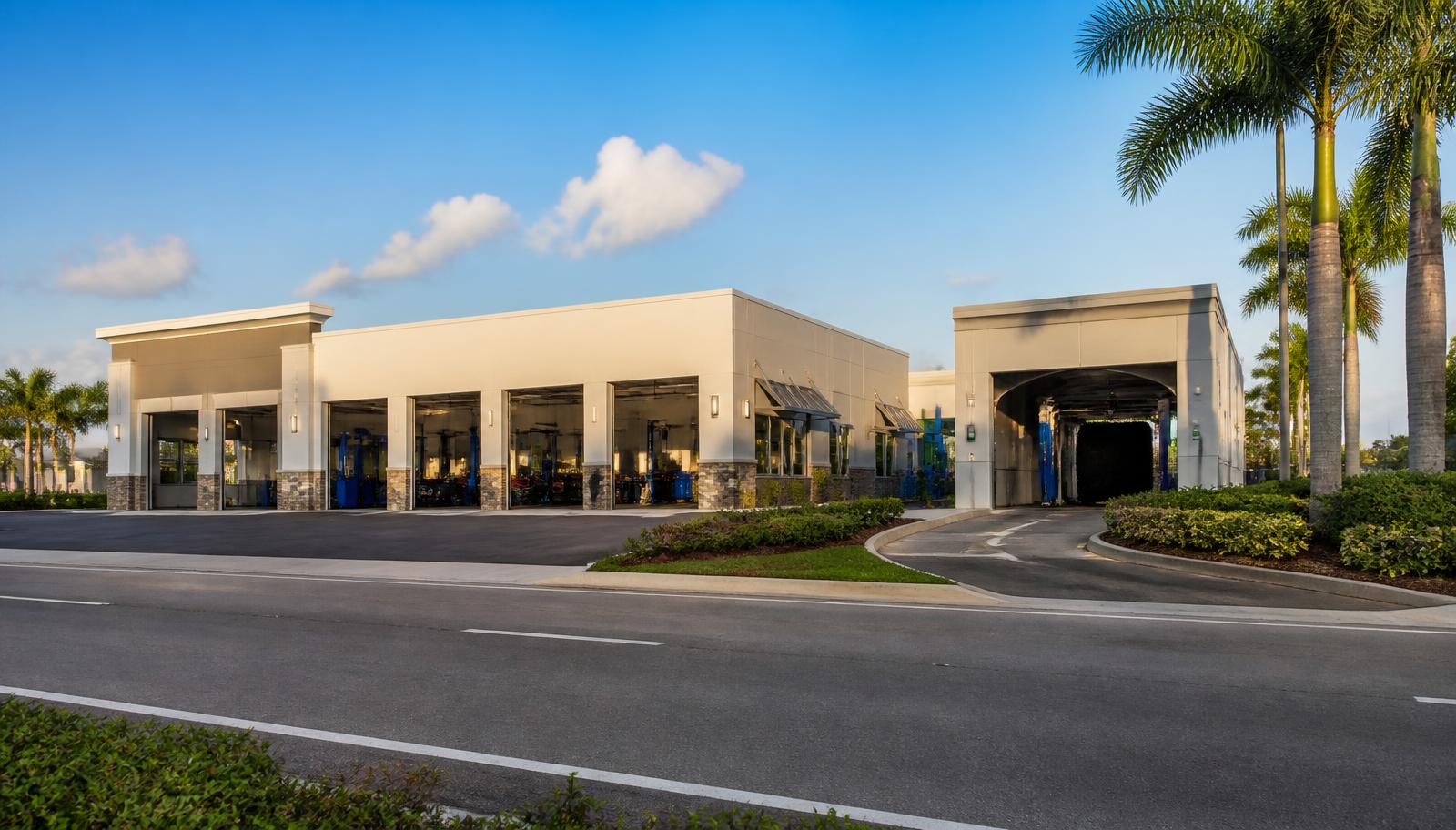
Commercial Property Sales
Liquidation Strategies for South Florida Automotive Real Estate, Car Washes, and Auto Service Centers
How corporate cash buyers underwrite environmental liability, covered land value, and NNN conversions when acquiring South Florida automotive property.
Driven by immense suburban sprawl and a culture fundamentally reliant on personal vehicles, the automotive service industry in South Florida is an economic powerhouse. For decades, independent operators and legacy landlords who owned auto repair shops, collision centers, tire stores, and car washes across Miami-Dade, Broward, and Palm Beach counties enjoyed consistent, recession-resistant cash flow.
However, owning and operating automotive commercial real estate today is becoming a regulatory and environmental minefield. Independent property owners are facing unprecedented scrutiny from local municipalities, skyrocketing insurance premiums, and exhausting operational overhead. When an owner reaches the point of management fatigue, whether looking to retire, cash out of a legacy family business, or execute a 1031 exchange into a passive asset, understanding how corporate acquisition groups underwrite automotive properties is the key to securing a fast, off-market cash exit.
The Environmental and Regulatory Headwinds Squeezing Auto Landlords
While auto service centers generate high gross revenues, maintaining these facilities in South Florida introduces intense carrying costs and extreme environmental liability.
The most severe localized pressure stems from county environmental agencies, specifically the Division of Environmental Resources Management (DERM) in Miami-Dade County and the Environmental Protection and Growth Management Department in Broward. These agencies rigorously enforce codes regarding oil-water separators, hydraulic lift fluid containment, and historical underground storage tanks (USTs).
If an older auto body shop or repair center has a minor fluid leak into the porous South Florida limestone, the landlord is held strictly liable. Remediating contaminated soil can easily cost hundreds of thousands of dollars. For many legacy owners, the constant threat of a failed municipal inspection or a massive, unbudgeted environmental cleanup prompts the decision to seek a clean, direct liquidation.
How Institutional Capital Underwrites Automotive Real Estate
When private equity firms, specialized net-lease funds, and direct corporate cash buyers evaluate a South Florida automotive facility or car wash, they focus heavily on environmental indemnification, alternative use potential, and equipment infrastructure.
To maximize your financial return during a private sale, you must understand exactly how buyers measure the value of your asset.
1. Real Estate vs. Business Value Allocation
Corporate buyers strictly separate the value of the physical real estate, the dirt and the building, from the value of the operating business, meaning the blue sky, customer lists, and equipment.
If an owner is selling both the real estate and the auto repair business together, the underwriter will evaluate the property's net operating income (NOI) based on what a replacement tenant would pay in market rent, completely independent of the current shop's profit margins.
2. The Covered Land and Redevelopment Play
In high-density corridors like US-1, Dixie Highway, or Federal Highway, aging auto service centers often sit on incredibly valuable real estate. Institutional buyers frequently underwrite these properties as covered land plays. They will acquire the auto center and collect the existing cash flow to cover property taxes while they spend two years running the property through city zoning boards to entitle the dirt for a higher-density use, such as a mid-rise apartment building or a multi-tenant retail plaza.
3. Absolute NNN Lease Conversions
If the facility is highly modernized, such as an express tunnel car wash, corporate buyers view the asset as a premium yield vehicle. They actively look to acquire the real estate and execute an immediate triple net (NNN) lease back to a national auto service operator. By converting a mom-and-pop gross lease into an absolute NNN structure, the buyer shifts all maintenance and environmental liabilities to the new corporate tenant, instantly forcing the asset's valuation upward.
The baseline real estate valuation math remains constant:
Bypassing Bank Financing Friction with a Direct Cash Sale
When an independent operator decides to sell an automotive property, selecting the proper liquidation channel is absolutely critical because of the environmental risks inherent to the asset class.
Listing an auto repair shop or car wash through a traditional commercial brokerage exposes the owner to severe financing risks. Traditional buyers rely on commercial bank loans or SBA financing. Before a bank will fund a loan on an automotive property, they mandate exhaustive environmental testing, starting with a Phase I Environmental Site Assessment (ESA).
Because automotive uses are inherently dirty, the Phase I almost always triggers a Phase II ESA, which requires drilling physical soil and groundwater samples on the property. If the bank's auditor discovers even trace amounts of historical oil or solvent contamination, the bank will immediately deny the loan. The buyer walks away, leaving the seller stranded with a newly documented environmental contamination record that they are now legally obligated to report to the state.
Executing a direct off-market sale to an established corporate cash buyer completely neutralizes this catastrophic risk. Private acquisition groups utilize dedicated, discretionary cash pools, allowing them to purchase automotive real estate as-is, absorbing all historical environmental liabilities, deferred roof maintenance, and equipment removal costs. This direct approach entirely bypasses conventional bank Phase II contingencies, eliminates standard 6 percent broker commissions, and secures a fast, confidential closing timeline that protects the operating business.
As Jason outlines in Why Small Businesses Fail Before They Even Start, real estate execution requires rigid fundamentals. Relying on a fragile bank loan for an asset with heavy environmental exposure is a flawed process.
Plan a Clean Exit from Your Automotive Property
To evaluate how corporate buying groups measure your property's yield and redevelopment potential under current market parameters, test your figures in our interactive cap rate calculator. If you are tired of dealing with DERM inspections and want to bypass public transaction friction, Submit a Property to our direct acquisition team for a confidential review today. For a comprehensive look at off-market transaction structures, explore our master guide on selling commercial property off market.
Submit a PropertyRelated Reading
This article is provided for general informational purposes only and does not constitute legal, tax, environmental, accounting, investment, appraisal, or brokerage advice. Environmental compliance obligations vary by site, county, and use history. Every transaction is subject to underwriting, due diligence, title, documentation, and final approval on the specific property.