
Commercial Real Estate
Liquidation Strategies for South Florida Single-Tenant Net Lease (STNL) Properties and Fast-Food Drive-Thrus
How corporate cash buyers underwrite lease decay, dark store value, and drive-thru entitlements when acquiring freestanding retail pads in South Florida.
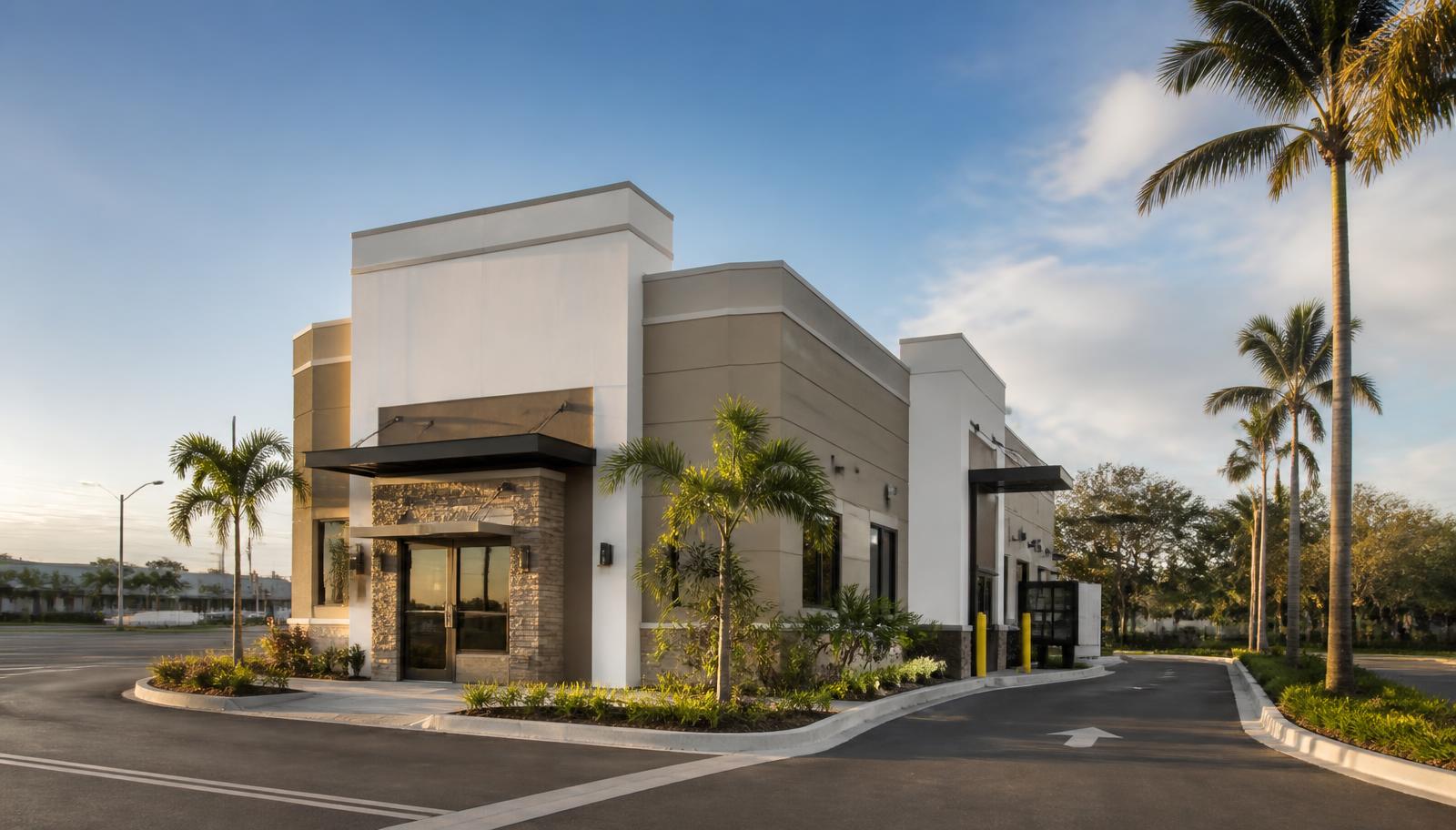
Across the commercial corridors of Miami-Dade, Broward, and Palm Beach counties, single-tenant net lease (STNL) properties and fast-food drive-thrus represent some of the most visible real estate in South Florida. From freestanding fast-food pads to corporate drugstores, auto parts retailers, and bank branches, these standalone assets have long been considered the gold standard for passive commercial real estate ownership.
However, managing and holding STNL assets in South Florida is not entirely risk free. Private owners, family trusts, and legacy landlords are increasingly facing critical decision windows, particularly as remaining lease terms decay, tenant credit profiles shift, or local real estate taxes spike.
When a property owner reaches a turning point, whether facing an impending lease expiration, seeking to capture peak equity, or executing a 1031 exchange into a larger portfolio, understanding how corporate acquisition groups underwrite single-tenant retail pads is essential to securing a fast, off-market cash liquidation.
The Operational and Lease-Decay Risks Squeezing Florida STNL Landlords
While freestanding STNL properties are marketed as hassle-free triple net investments, independent property owners face distinct localized liabilities that can rapidly erode asset value if left unaddressed.
1. The Lease Decay Valuation Cliff
The valuation of a single-tenant property is intrinsically linked to the length of the remaining lease term. When a property has 15 to 20 years remaining on a corporate NNN lease, it commands prime, low cap rates from institutional buyers. However, once the remaining primary lease term drops below 10 years, and especially as it approaches the five-year mark, institutional buyers and bank lenders heavily discount the asset.
If the corporate tenant decides not to exercise an extension option, the landlord is left with a vacant building, known as dark store risk, zero rental income, and ongoing property tax and insurance liabilities.
2. Corporate Versus Franchisee Lease Guarantees
Not all single-tenant leases are created equal. Independent landlords often discover during an appraisal or sale process that their lease is guaranteed by a local or regional franchisee rather than the national corporate entity. If the franchisee experiences operational distress or files for restructuring, the lease guarantee provides significantly less protection, introducing substantial credit risk that depresses the asset's market value.
3. Rising South Florida Property Taxes and Insurance
Even under a triple net lease structure where the tenant pays taxes and insurance, drastic spikes in local South Florida real estate tax assessments and windstorm insurance premiums create operational friction. If the tenant's overall cost of occupancy becomes too high relative to store sales, the location becomes unprofitable, increasing the likelihood that the tenant will vacate at the end of the term. Retail industry bodies such as ICSC track how occupancy cost ratios and store-level performance drive retail tenant renewal behavior.
How Institutional Capital Underwrites Freestanding Retail Pads
When private equity firms, net lease funds, and direct corporate cash buyers evaluate a South Florida single-tenant property, they look beyond the brand name on the sign. They analyze the underlying land value, dark store residual value, and sales coverage metrics.
1. Dark Store Valuation and Residual Dirt Value
Corporate buyers calculate the dark value of the asset, meaning what the property is worth if the tenant leaves tomorrow. This involves evaluating the site's physical location, corner visibility, traffic counts, and drive-thru zoning entitlements. In dense urban submarkets like Doral, Fort Lauderdale, or West Palm Beach, a parcel with a certified drive-thru permit carries immense intrinsic residual value, regardless of the current tenant operating on the site.
The fundamental dark value equation calculates property value based strictly on underlying land value and dark re-tenanting market rents:
2. Underwriting Low Cap Rate 1031 Exchange Dynamics
Single-tenant net lease properties are heavily driven by 1031 exchange buyers seeking passive income. As we highlighted in our underwriting breakdown of Commercial Real Estate Lending: The 800K Burger King Deal, STNL properties frequently trade at aggressive cap rates, such as 5 percent to 7 percent, because buyers are placing capital from 1031 exchanges under tight IRS time constraints.
In that episode, our team analyzed a freestanding Burger King with a 20-year corporate NNN lease generating $147,000 in net annual income. While buying such an asset at a low cap rate might not fit every acquisition strategy, lending against it or acquiring it off market at an attractive basis provides exceptional downside protection because of the strong corporate lease and low loan to value cushion.
Bypassing Public Market Friction with a Direct Cash Sale
When an owner decides to exit a single-tenant property or fast-food drive-thru, selecting the proper liquidation channel determines the speed, privacy, and net payout of the transaction.
Listing an active single-tenant property through a traditional commercial brokerage exposes the store's operational status to the public. If store employees or local managers learn the property is for sale, it can create operational panic and staff turnover. Traditional buyers relying on conventional commercial bank loans will also demand lengthy 90-day due diligence periods, bank appraisals, and corporate financial audits. If the lender's credit committee questions the franchisee's financials, the deal can collapse at the last minute.
Executing a direct off-market sale to an established corporate cash buyer removes these risks entirely. Private acquisition groups utilize dedicated, discretionary cash pools, purchasing single-tenant properties completely as-is regardless of remaining lease term or tenant credit structure. This direct approach eliminates standard 6 percent broker commissions, guarantees operational confidentiality for the operating tenant, and secures a fast, reliable closing timeline.
As Jason emphasizes in Why Small Businesses Fail Before They Even Start, real estate decisions must be driven by strict processes and fundamentals. Having a defined, off-market liquidation process prevents lease-decay losses and ensures you exit at peak valuation.
Evaluate Your South Florida STNL Property
To evaluate how corporate buying groups measure your single-tenant property's performance under current market parameters, test your figures using our interactive cap rate calculator. If you are preparing to sell a freestanding retail pad, drive-thru, or STNL property and want to avoid public brokerage friction, Submit a Property to our direct acquisition team for a confidential review today. For an in-depth breakdown of direct off-market transaction structures, explore our master guide on selling commercial property off market.
Submit a PropertyRelated Reading
This article is provided for general informational purposes only and does not constitute legal, tax, investment, appraisal, or brokerage advice. Lease terms, guarantees, zoning, and entitlement requirements are property and jurisdiction specific. Every transaction is subject to underwriting, due diligence, title, documentation, and final approval on the specific property.