
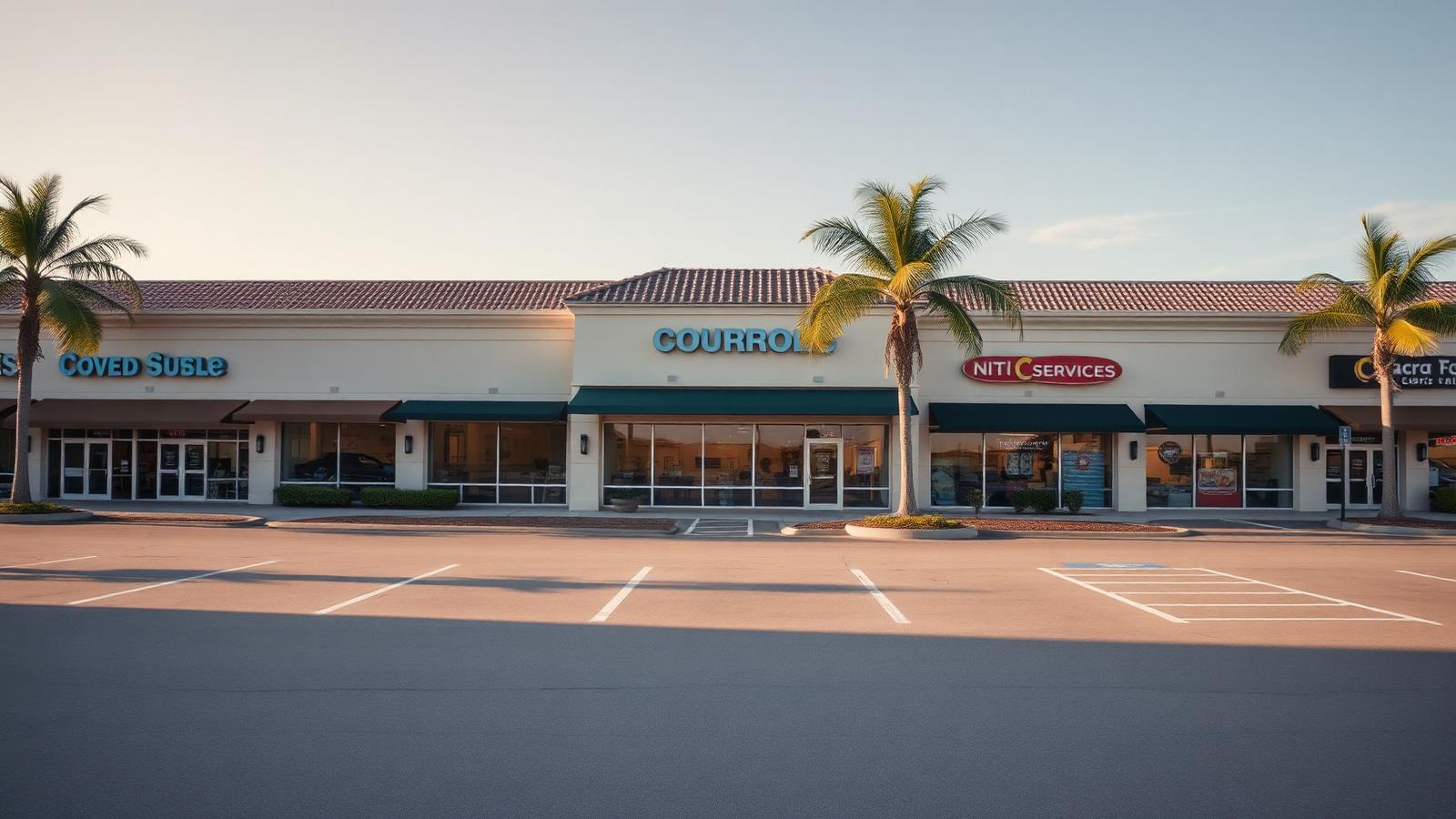
Commercial Real Estate
Liquidation Strategies for Retail Strip Centers and Shopping Plazas in South Florida
South Florida retail landlords face rising insurance costs, CAM friction, tenant turnover, and deferred maintenance. Learn how institutional buyers underwrite strip centers and how an off-market sale may provide a faster, cleaner exit.
For decades, owning a neighborhood retail strip center or unanchored shopping plaza in South Florida has been a hallmark of generational wealth. Spanning the dense, high-traffic corridors of Miami-Dade, Broward, and Palm Beach counties, these properties have historically provided independent landlords with steady, reliable cash flow.
However, managing retail commercial real estate today is a vastly different enterprise than it was a decade ago. Independent owners and legacy families are facing intense operational friction, from shifts in consumer behavior to rising local regulatory and environmental costs. When an owner reaches a point of management fatigue — whether dealing with tenant turnover, preparing for retirement, or seeking a 1031 exchange into a passive asset — understanding how corporate acquisition groups underwrite retail plazas can help inform a private, off-market cash exit.
The Operational Headwinds Squeezing Florida Retail Landlords
Operating a multi-tenant retail property in South Florida introduces compounding liabilities that can erode net operating income (NOI). Independent landlords relying on legacy holding models often find that keeping a plaza stabilized requires meaningful capital and daily management.
The most severe localized pressure is the escalation of commercial property and windstorm insurance premiums. Older strip centers — particularly those with aging flat roofs or those located east of I-95 in coastal zones — face restrictive insurance underwriting, driving fixed costs higher.
Independent owners also carry the administrative burden of Triple Net (NNN) lease management and Common Area Maintenance (CAM) reconciliations. When a plaza experiences unexpected capital expenditures — such as parking-lot repaving or an HVAC replacement for a restaurant tenant — landlords typically front the capital and then work to collect prorated CAM reimbursements from tenants who are already navigating margin pressure. For many owners, that friction is what ultimately makes a direct, discreet sale attractive.
How Institutional Capital Underwrites Retail Real Estate
When private equity firms, family offices, and dedicated corporate cash buyers evaluate a South Florida retail strip center, their underwriting teams look far beyond basic occupancy percentages. Presenting a clean, verifiable rent roll that highlights the asset's operational stability and risk profile can meaningfully influence pricing during a private sale. Industry organizations such as the International Council of Shopping Centers (ICSC) publish research on how tenant mix, format, and consumer behavior shape modern retail center valuation.
Weighted Average Lease Term (WALT)
Underwriters do not just look at how much rent is coming in; they measure how long that income is contractually committed. The Weighted Average Lease Term (WALT) is a primary metric used to evaluate a plaza's vacancy risk.
Corporate buyers calculate WALT by weighting each tenant's remaining lease term against the percentage of total rental income they provide. Expressed in plain form:
WALT = Σ (Annual Renti × Remaining Yearsi) ÷ Total Annual Property Rent
Sum across each tenant i in the rent roll.
If a 15,000-square-foot plaza is 100% occupied but every tenant is on a month-to-month lease, institutional buyers typically discount the property because the WALT is low, representing meaningful near-term turnover risk.
E-commerce-Resistant Tenant Mix and Synergy
Corporate investment groups closely scrutinize the composition of the rent roll. In the modern retail environment, many buyers place a valuation premium on service-oriented tenants that are less exposed to e-commerce disruption. A strip center supported by a local medical clinic, a high-volume restaurant, a nail salon, and a boutique fitness studio may command a lower cap rate — and therefore a higher purchase price — than a plaza filled with easily replaceable soft-goods retailers.
Value-Add Repositioning and Outparcel Potential
Underwriters audit the property's parcel footprint and local zoning codes. If a shopping plaza features surplus parking-lot acreage or an unutilized grassy outparcel facing a major intersection, corporate buyers may view this as a potential value-add development opportunity. The ability to legally carve out a pad site and construct a freestanding drive-thru for a national quick-service brand can meaningfully influence the underlying land value — subject to entitlements, utility capacity, and market absorption.
The Strategic Advantage of a Direct Off-Market Liquidation
When an independent operator decides to exit the retail market, the transaction vehicle materially affects the speed, privacy, and net proceeds of the deal.
Listing a retail strip center through a traditional public marketing campaign can introduce execution risk. A public listing signals to the existing tenant base that the property is changing hands, which can prompt small business owners to hold back on store improvements or hesitate on lease renewals while the plaza sits on the market. Traditional buyers using commercial bank financing typically require exhaustive environmental studies, Phase I assessments, and lender appraisals. If a lender's underwriter identifies a historical environmental concern — for example, a former dry-cleaning tenant on the site — financing timelines can extend or restructure, which affects the seller's certainty.
A direct off-market sale to an established corporate cash buyer changes the dynamic. Private acquisition groups typically deploy discretionary capital, which can allow them to consider retail plazas on an "as-is" basis, subject to their own diligence around existing tenant matters, deferred maintenance, and environmental review. A direct model can reduce or eliminate standard listing-broker commissions when no broker is involved, may support a more compressed closing timeline, and can help protect the day-to-day operational stability of the active tenants during a transition.
Every transaction remains subject to negotiated documentation, buyer diligence, title review, and final approval. Timing, purchase price, and terms depend on the specific property.
Evaluate Your Retail Center Position
To evaluate how corporate buying groups may analyze your retail plaza's performance under current market parameters, review your baseline economic alignment by testing your figures in our interactive cap rate calculator. If you are tired of fighting for CAM reimbursements and want a confidential corporate cash review, Submit a Property to our direct acquisition team. For a broader breakdown of off-market transaction structures, explore our master guide on selling commercial property off market.
Submit a PropertyRelated Reading
This article is provided for general informational purposes only and does not constitute legal, tax, investment, appraisal, or brokerage advice. Purchase price, terms, timing, and closing are subject to underwriting, due diligence, and final documentation on each individual property.