
Commercial Property Sales
Liquidation Strategies for South Florida Covered Land, Commercial Parking Lots, and Infill Parcels
Explore how institutional buyers evaluate South Florida commercial land, covered-land assets, parking lots, FAR density, carrying costs, and direct off-market cash acquisitions.
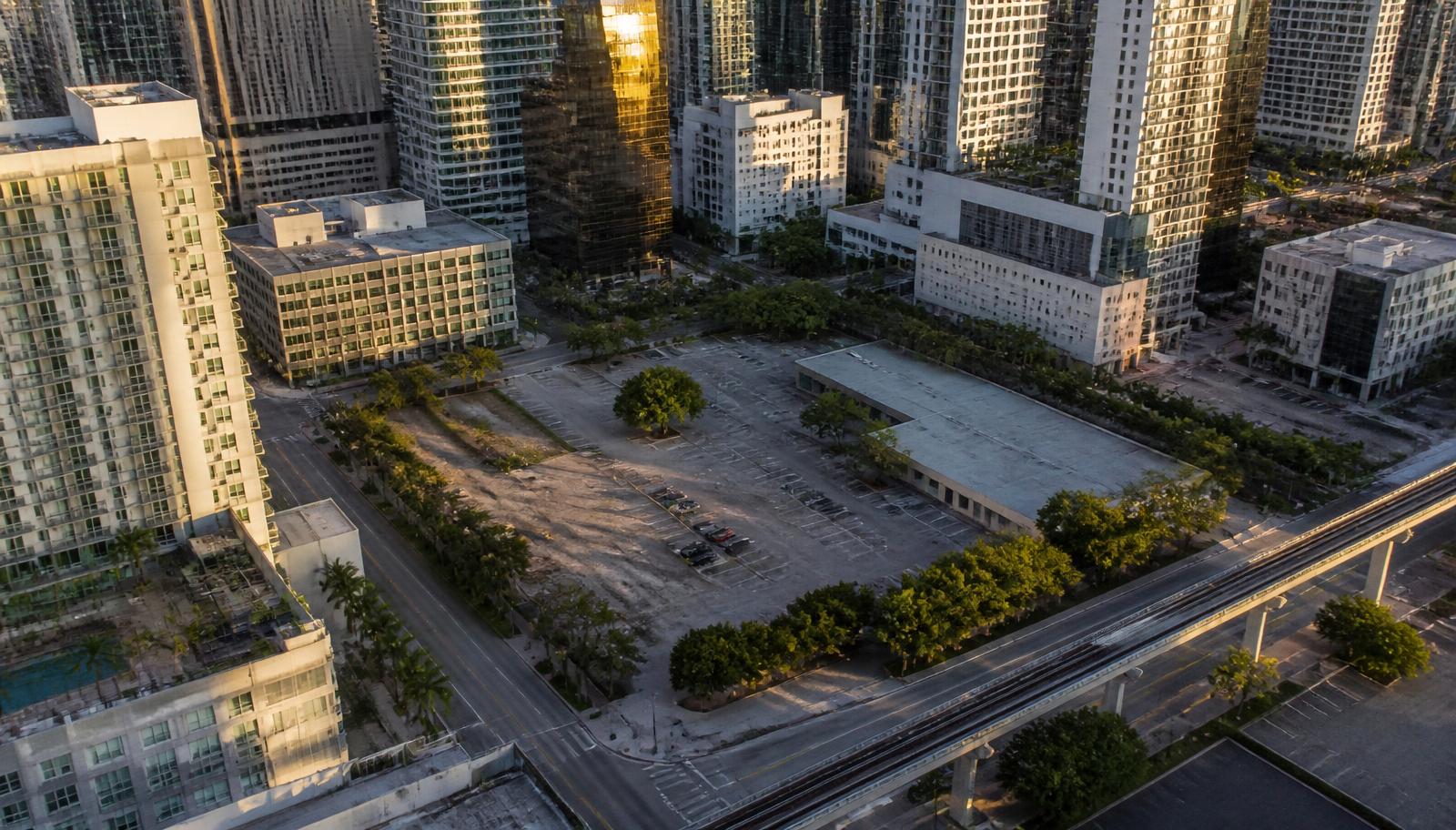
In the dense, urbanized coastal core of South Florida, stretching from downtown Miami and Fort Lauderdale up to West Palm Beach, commercial land is the ultimate scarce resource. For decades, private families, estate trusts, and legacy investors who acquired urban parking lots, vacant commercial parcels, or single-story "covered land" assets enjoyed an effortless hold strategy. The land simply appreciated while sitting in the path of progress.
However, holding unimproved or underutilized commercial land in South Florida today is a vastly different financial proposition. Independent owners are facing escalating property taxes, strict municipal code enforcement, and lengthy, expensive entitlement processes. When a landowner reaches a turning point, whether facing high carrying costs, navigating a partnership split, or seeking to deploy capital into an income-producing asset via a 1031 exchange, understanding how corporate acquisition groups underwrite infill dirt is essential for securing a fast, off-market cash exit.
The Carrying-Cost Trap Facing South Florida Landowners
While raw dirt in prime submarkets commands high headline valuations, holding land without immediate development generates significant financial friction. Mom-and-pop landholders who lack the massive capital required to ground-up develop their parcels face several localized pressures.
1. Escalating Non-Income-Producing Property Taxes
Unlike an apartment building or an industrial warehouse that generates daily rent to cover its tax bill, a vacant commercial parcel or surface parking lot generates minimal gross revenue. In high-density districts across Miami-Dade and Broward counties, annual real estate tax assessments on prime commercial parcels have climbed dramatically, forcing owners to bleed cash every year just to keep the title clean.
2. Permitting, Zoning, and Environmental Friction
Developing land in South Florida requires navigating a complex regulatory maze. Municipalities impose strict Floor Area Ratio (FAR) limitations, parking requirements, and lengthy public hearing processes. Furthermore, local environmental agencies, such as the Division of Environmental Resources Management (DERM) within Miami-Dade County, enforce rigorous soil testing and site remediation standards. For an independent owner, spending two to three years and hundreds of thousands of dollars on architectural plans, traffic studies, and legal fees just to entitle a parcel introduces immense risk.
How Institutional Capital Underwrites Infill Land and Covered Assets
When private equity firms, merchant developers, and direct corporate buyers evaluate a South Florida land parcel or parking lot, they do not base their offer on speculative hype. They rigorously underwrite the timeline to monetization.
As we demonstrate in our deal breakdown on Private Money Lending on The Route: 3 Deals, 3 Answers, land that cannot be developed in the near term represents weak collateral and high holding risk. In that episode, our team analyzed a $600,000 loan request backed by a surface parking lot claimed to be worth $2.2 million. Standing on the asphalt, the decision was a swift pass: developing the parcel meant years of municipal permitting, heavy infrastructure capital, and construction that would severely disrupt the four surrounding buildings.
To secure a premium cash valuation from an institutional buyer, your parcel must fit specific underwriting parameters.
Infill Land Underwriting Matrix
- Covered land yield (interim income to offset carrying costs)
- Zoning and Floor Area Ratio (FAR) density caps
- Development timeline and entitlement certainty
1. The "Covered Land" Strategy
Institutional buyers love covered land plays, meaning parcels that contain an existing, low-density building (like a tear-down retail shop or auto garage) or a paved surface parking lot. The interim rental income covers the property taxes and carrying costs while the developer works through the multi-year municipal entitlement process. If your parcel generates short-term parking fees or billboard rent, that baseline cash flow significantly increases its valuation.
2. Floor Area Ratio (FAR) and Density Calculations
Underwriters calculate the maximum buildable square footage of a parcel using the Floor Area Ratio (FAR) dictated by local zoning codes. The mathematical formula for buildable space is:
If your 20,000-square-foot lot carries an FAR of 5.0, a developer can construct up to 100,000 gross square feet of commercial or residential space. Parcels located within Transit-Oriented Development (TOD) corridors or urban cores that allow higher FAR multiples command the highest price per square foot.
Bypassing Developer Option Friction with a Direct Cash Sale
When an independent landowner decides to sell an infill parcel or commercial parking lot, selecting the proper transaction vehicle determines whether the deal actually closes. Listing land through a traditional commercial brokerage exposes the owner to the infamous developer option trap. Traditional land buyers rarely buy land outright; instead, they insist on long, 12-to-18-month contract contingencies. They put down a small deposit, tie up your property, and spend a year trying to get city zoning approvals or bank financing. If the city rejects their plan or interest rates jump, the developer walks away, leaving the landowner stranded after wasting over a year of carrying costs and property taxes.
Executing a direct off-market sale to an established corporate cash buyer completely removes this vulnerability. Private acquisition groups utilize dedicated equity pools, purchasing commercial land and covered assets "as-is" for cash without demanding multi-year entitlement contingencies. This direct approach eliminates standard 6% broker commissions, eliminates developer option delays, and secures a fast, guaranteed closing timeline.
As Jason lays out in Why Small Businesses Fail Before They Even Start, success requires having a rigid, defined process step-by-step. Selling underutilized dirt is no different. Having a clear, direct cash exit strategy prevents capital loss and eliminates holding cost bleed.
Evaluate Your South Florida Land or Parking Lot
To evaluate how corporate buying groups measure land value and carrying yield under current market parameters, test your figures in our interactive cap rate calculator. If you are tired of paying heavy property taxes on an underutilized parcel and want to secure a guaranteed corporate cash evaluation, Submit a Property to our direct acquisition team for a confidential review today. For an in-depth look at off-market transaction structures, explore our master playbook on selling commercial property off market.
Submit a PropertyRelated Reading
This article is provided for general informational purposes only and does not constitute legal, tax, zoning, environmental, investment, appraisal, or brokerage advice. Zoning, FAR, and environmental requirements are jurisdiction specific. Every transaction is subject to underwriting, due diligence, environmental review, title, documentation, and final approval on the specific property.