
Industrial & Logistics Capital
The Rise of Industrial Outdoor Storage (IOS): Financing High-Yield Logistics Land in South Florida
How South Florida industrial yards are evaluated, improved, and financed, from environmental due diligence and zoning to site work, leasing, and longer-term debt.
In South Florida's land-constrained commercial real estate market, investors continue to look for yield. With many traditional warehouses in Miami-Dade and Broward counties trading at relatively low capitalization rates, some sponsors are evaluating Industrial Outdoor Storage (IOS), also referred to as Industrial Service Facilities (ISF).
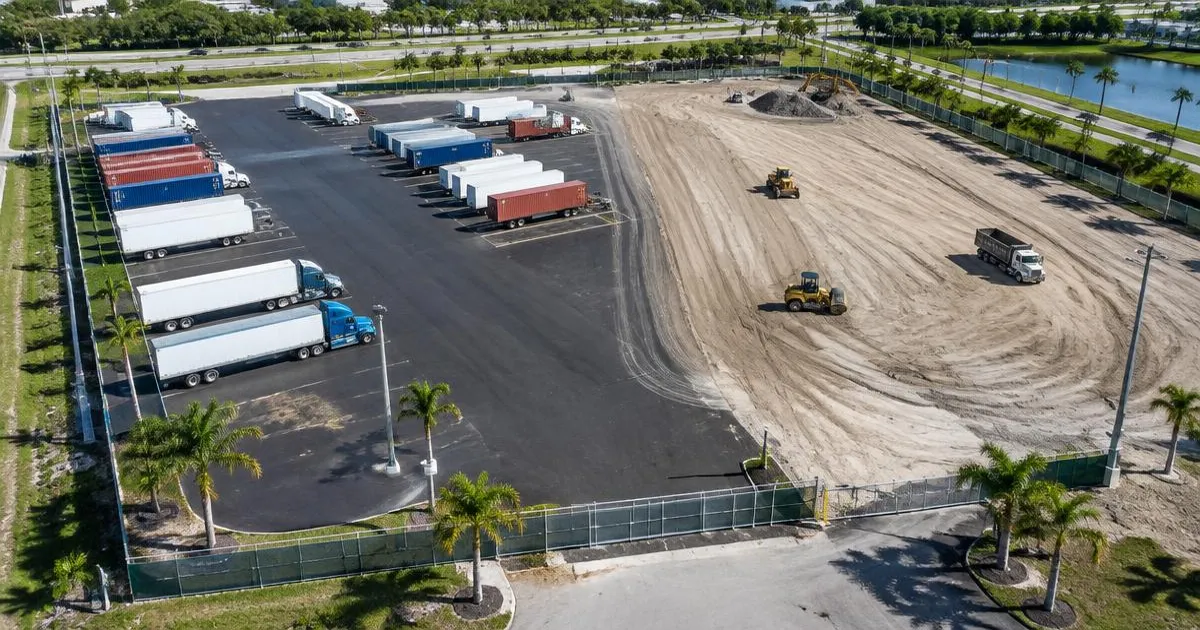
Industrial Outdoor Storage, commonly abbreviated IOS, is a specialized industrial real estate segment where the primary utility comes from outdoor land used for truck and trailer parking, container storage, equipment storage, contractor yards, fleet operations, or similar logistics and service uses. A legacy truck yard in Medley or Hialeah may look dated, but investors may see a site whose value lies in location and zoning rather than buildings. Repositioning one of these lots, however, can involve environmental diligence, site work, and financing that differs from a conventional warehouse loan.
1. Why Industrial Outdoor Storage Matters in South Florida
South Florida's geography, population density, major ports, airports, highways, and constrained infill development environment can make strategically located industrial land valuable to logistics, transportation, construction, and service businesses. With the Atlantic to the east and the Everglades to the west, sites near corridors such as the Florida Turnpike and I-95 can be limited.
IOS has attracted growing institutional interest as investors place greater value on infill land, zoning scarcity, logistics utility, and proximity to population centers and transportation infrastructure. An underutilized industrial yard may have repositioning potential when zoning, access, parcel configuration, improvements, and local demand support higher-quality users.
Lease structure varies by tenant and transaction. Some IOS leases may place significant property-level expenses on the tenant, but the final allocation of taxes, insurance, maintenance, environmental responsibilities, and improvements is negotiated. IOS properties may have fewer building systems than traditional warehouse properties, but they can still carry meaningful operating expenses, including paving and drainage maintenance, lighting, fencing, security, insurance, and taxes.
2. Environmental Due Diligence and Financing Risk
Older industrial yards may have histories involving fuel, vehicle maintenance, petroleum products, waste handling, or other uses that warrant careful environmental review. A Phase I Environmental Site Assessment reviews current and historical property uses and other information to identify recognized environmental conditions that may warrant further investigation.
If the Phase I identifies recognized environmental conditions or other concerns, additional investigation may be recommended. That may include a Phase II Environmental Site Assessment involving soil, groundwater, or other sampling. Environmental cleanup and regulatory closure may involve the Florida Department of Environmental Protection, local environmental agencies, or other authorities depending on the location and issue. Buyers should coordinate environmental due diligence with qualified environmental consultants and legal counsel before acquisition.
Known or suspected environmental conditions can materially complicate conventional financing because lenders must evaluate collateral risk, cleanup obligations, potential liability, remediation cost, and the effect on value and marketability. A lender may require additional environmental investigation, remediation, indemnities, reserves, environmental insurance, regulatory documentation, or other protections before proceeding. For owners of a distressed yard, a direct sale can be one option; our guide to selling commercial property off market explains how that process can work.
3. Zoning, Site Improvements, and Horizontal CapEx
Zoning and entitlement restrictions can limit the supply of appropriately located IOS sites, particularly in dense infill markets. Before acquiring a site to buy commercial truck parking in Miami or elsewhere in the region, a buyer typically confirms permitted uses, access, and any conditions on outdoor storage.
Repositioning an IOS site can require substantial horizontal CapEx. Work may include grading, remediation where required, surfacing, stormwater improvements, perimeter fencing, gates, and lighting. Depending on the tenant and use, site surfacing may range from stabilized aggregate to asphalt or concrete. Adding impervious surface can materially change stormwater requirements and should be evaluated before construction.
Revenue may decline or temporarily stop during significant remediation or construction, depending on whether the site can remain partially operational. That carrying period is one reason sponsors plan the Capital Expenditure budget and financing together.
4. Financing and Stabilizing an IOS Property
Bridge financing can be one capital source for acquiring and repositioning an IOS property. IOS commercial real estate financing and industrial service facilities bridge loan terms vary, and a lender may weigh current income, projected stabilized value, the improvement budget, environmental findings, and the exit plan. A buyer may negotiate an as-is acquisition, but the transaction can still involve environmental diligence, title review, survey, zoning analysis, inspections, and contractual conditions.
A bridge facility may include a controlled future-funding reserve for approved site improvements or remediation. Some private lenders may consider environmental-remediation costs where the scope, regulatory path, collateral value, sponsor, and exit strategy are acceptable. Submit a Property to discuss an IOS acquisition scenario.
Following improvements, the owner may pursue leasing to logistics, transportation, construction, fleet, or other industrial users, including national or regional logistics operators. If successfully leased, the stabilized property may generate recurring rental income. Once environmental issues are addressed, site improvements are complete, and the property demonstrates acceptable income and collateral quality, the owner may pursue longer-term financing. Sponsors can test how NOI and cap-rate assumptions translate into value with our cap rate calculator; it does not determine bridge proceeds or loan approval.
Successful entitlement, remediation, improvements, and leasing may increase property value, but the result depends on total project cost, achieved NOI, cap rates, market demand, and financing costs. As discussed in The Discipline Loop: Why Your Process Beats Your Goals, a consistent process helps investors look past a site's appearance and evaluate its logistics utility.
Price Capital Group evaluates commercial real estate opportunities involving industrial properties, transitional assets, complex site conditions, and redevelopment scenarios based on location, collateral, zoning, environmental diligence, current income, project scope, leverage, sponsor liquidity, and exit strategy. If you are evaluating an industrial outdoor storage property, truck yard, logistics site, or industrial land opportunity in South Florida, Submit a Property for a confidential review.
Related Reading
General educational information only, not legal, environmental, tax, lending, or investment advice. Environmental obligations, zoning, permitted uses, lease terms, and financing depend on the property, jurisdiction, and transaction. Consult qualified environmental consultants, counsel, and a CRE advisor. No approval, leverage, remediation outcome, tenant, or refinancing is guaranteed.