
Construction & Rescue Capital
Rescuing Mid-Flight Construction Projects: The Mechanics of Broken Priority Bridge Capital
How cost overruns, suspended draws, and mechanic's liens can stall a commercial project, and how rescue capital may be underwritten to help finish construction and plan the exit.
Ground-up commercial development tests a sponsor's financial endurance. Even well-underwritten construction projects can encounter material cost overruns, delays, labor constraints, change orders, and unexpected site conditions that consume the original contingency budget. Supply-chain disruptions and increases in raw material costs can add further pressure.
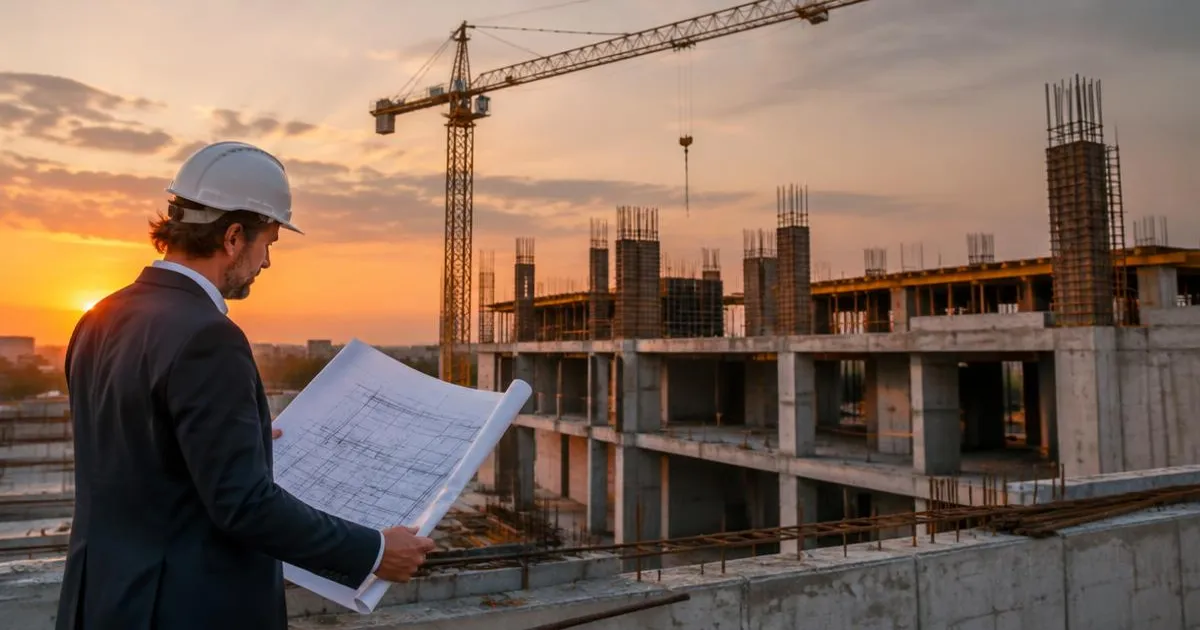
Consider an illustrative scenario: a development is roughly 60% complete when the sponsor's remaining capital runs out. Construction draws are suspended, contractors and subcontractors slow down or leave the site, and the project stalls mid-flight. Not every project at that stage follows the same path, but when it happens, the sponsor typically needs a plan to address title issues, fund the remaining work, and avoid a forced outcome on a partially built asset.
1. Why Mid-Flight Construction Projects Run Out of Capital
Construction lenders typically size loans using Loan to Cost (LTC) parameters: the lender funds a portion of the approved budget and the sponsor contributes the rest as equity. The lender generally expects the committed loan and required equity to be sufficient to complete the project.
Illustrative example only. A sponsor secures a $20 million construction loan on a $30 million project, roughly 66.7% LTC. Overruns then push total project cost to $35 million, creating a $5 million gap the original capital stack was not designed to cover.
If total project cost rises materially, the original loan may become out of balance and the borrower may need additional equity or another source of capital. Whether a lender increases, modifies, or declines to expand the loan depends on its policies, the loan documents, and the project. Because a stalled building usually generates no operating income, the debt must still be carried while construction is incomplete.
When a construction loan becomes distressed, the lender may evaluate several alternatives, including additional borrower equity, budget rebalancing, maturity extension, modification, additional collateral, controlled completion, a loan sale, or enforcement of remedies. Foreclosure is one possible outcome, not the only one.
2. Mechanic's Liens, Draw Freezes, and Priority Risk
When a developer cannot pay the general contractor, payment problems can move quickly down to subcontractors and suppliers. Unpaid contractors and subcontractors may obtain mechanic's or construction liens under applicable state law. Those liens can create significant title and priority issues for the construction lender.
Lien priority is state-specific. Recording dates, commencement-of-work rules, relation-back statutes, the treatment of future construction advances, title-insurance provisions, and loan-document requirements can all affect how a mechanic's lien ranks against a construction mortgage. A mechanic's lien does not automatically become senior to the mortgage in every case.
In construction finance, "broken priority" commonly refers to a situation in which intervening liens or other title issues create uncertainty about whether future construction-loan advances will retain the lender's intended lien priority. It is a market term rather than a single statutory definition applied across every state.
A construction lender may suspend, condition, or restructure future advances when the project is out of balance, required borrower equity has not been contributed, liens arise, completion costs exceed remaining proceeds, or the loan documents are otherwise in default. Priority concerns can cause a construction lender, title insurer, or both to require additional documentation, lien resolution, borrower equity, indemnities, endorsements, or other protections before additional construction funds are advanced. For the sponsor, that can create a liquidity gap: the work cannot resume without funds, and funds may not be released until the title issues are addressed.
3. How Construction Rescue Capital Is Underwritten
Private bridge or construction-completion capital can be one option when the existing loan cannot support the revised completion plan. Other paths may include an existing-lender workout, additional sponsor equity, joint venture or preferred equity, a replacement construction lender, a note purchase, an asset sale, or a broader recapitalization. Sponsors facing maturity pressure on other assets may find related considerations in Navigating the Commercial Real Estate Maturity Cliff: Using Bridge Debt for Distressed Recapitalizations.
A rescue-capital provider will typically focus heavily on the verified cost to complete. That figure is broader than the remaining physical construction budget and may include:
- Remaining hard and soft costs, approved change orders, and unfunded commitments
- Contractor payables, retainage, and existing mechanic's liens
- Taxes, insurance, interest carry, lender fees, and professional fees
- Contingency, municipal fees, and utility costs
- Final inspections, Certificate of Occupancy requirements, and lease-up costs where applicable
A rescue lender may use third-party construction consultants, engineers, inspectors, or quantity-surveying professionals to validate percentage completion, remaining costs, draw history, and the schedule to completion. A rescue lender may focus on the forward-looking completion plan while also reviewing how prior overruns occurred, whether the current budget is credible, and whether the sponsor can manage the remaining execution risk.
Underwriting may consider the as-is value, completed value, stabilized value, cost basis, remaining budget, total debt, sponsor equity, market demand, and proposed exit. Projected value alone does not support a loan.
The new financing may refinance the existing construction lender as part of the recapitalization. Alternatively, a rescue structure may involve a participation, an intercreditor agreement, additional junior capital, preferred equity, or a modification with the existing lender. Closing a rescue facility may require the parties to resolve or appropriately insure over existing mechanic's liens and other title exceptions, through tools such as payoff, release, bonding off a lien, escrow, subordination, settlement, title endorsement, or court resolution where necessary.
At closing, approved proceeds may be used to refinance existing debt, resolve agreed lien claims, fund required reserves, and establish the remaining construction budget. Resulting priority must still be confirmed through title, legal documentation, recording, and applicable law; paying liens does not by itself guarantee clean title. Submit a Property to discuss a stalled construction scenario.
4. Completing Construction and Planning the Permanent Exit
Remaining construction proceeds may be held in a controlled reserve and funded through an approved draw process. Future draws may require inspections, percentage-completion verification, an updated budget, lien waivers, invoices, any required equity contribution, title continuation, and confirmation that no default exists. Draw controls are designed to ensure funds are released in line with verified work completed, remaining budget, and lender requirements. Construction funds are not guaranteed through completion.
Construction-rescue terms vary by project and lender. The maturity should provide enough time for completion, inspections, leasing or sale, and the planned exit, with appropriate contingency. As an illustration only, some rescue facilities are structured with terms in the range of 12 to 18 months.
Obtaining the required Certificate of Occupancy or equivalent municipal approval can materially reduce construction risk. It is useful to keep four milestones separate: completion, when the physical project is finished; the Certificate of Occupancy, the municipal approval to occupy where applicable; lease-up, when tenants begin occupying; and stabilization, when the property reaches a sustainable operating level. A CO does not by itself create equity, guarantee lease-up, or establish permanent financing eligibility.
Following completion, the sponsor may begin or continue lease-up depending on the property type and business plan. Lease-up remains subject to market demand, rents, tenant concessions, competition, property type, and economic conditions. The business plan may target stabilized NOI, but actual performance depends on occupancy, rents, operating expenses, concessions, collections, and market conditions. Sponsors can test how NOI and cap-rate assumptions translate into value with our cap rate calculator; it does not determine cost to complete, lien priority, draw availability, or loan approval.
Once construction is complete and the property meets the next lender's underwriting requirements, the sponsor may pursue permanent refinancing. Potential exits may include a bank refinance, agency financing or CMBS where eligible, a life company loan, a sale, an additional recapitalization, or an extension. A permanent lender may consider NOI, DSCR, debt yield, LTV, occupancy, seasoning, tenant quality, property type, borrower strength, market conditions, and the appraisal. No specific takeout is assured.
As discussed in The Discipline Loop: Why Your Process Beats Your Goals, a disciplined process matters more than reacting under pressure. On a nearly finished building, that means evaluating replacement capital and workout options early rather than letting a stalled schedule decide the outcome.
Price Capital Group evaluates real estate backed financing opportunities involving stalled construction, transitional assets, and complex recapitalization scenarios based on collateral, cost to complete, leverage, sponsor liquidity, project status, and exit strategy. If you are evaluating a stalled commercial construction project, frozen draw situation, or cost-to-complete gap, Submit a Property for a confidential financing review.
Related Reading
- Resolving Stalled Developments: Utilizing a Commercial Construction Completion Loan for Mid Flight Rescues
- Navigating the Mid-Flight Crisis: Commercial Rescue Capital for Stalled South Florida Construction Projects
- Navigating the Commercial Real Estate Maturity Cliff: Using Bridge Debt for Distressed Recapitalizations
General educational information only, not legal, tax, accounting, lending, or investment advice. Mechanic's lien priority, draw administration, title insurance, lender remedies, and financing depend on the documents, jurisdiction, borrower, and transaction. Consult qualified construction counsel, a title professional, and a CRE advisor. No approval, leverage, closing timeline, lien resolution, completion funding, Certificate of Occupancy, or refinancing outcome is guaranteed.