
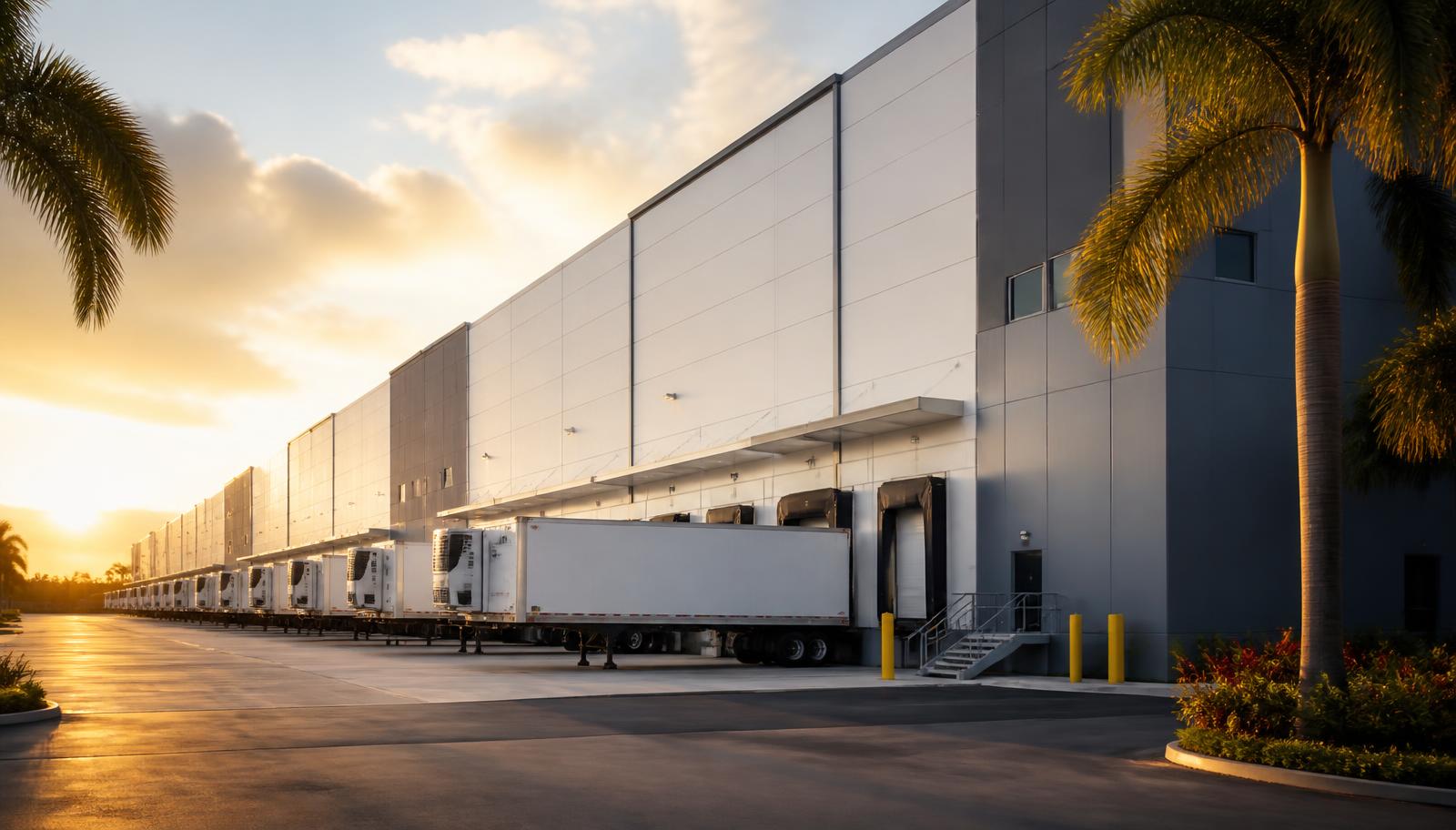
Commercial Property Sales
Liquidation Strategies for South Florida Industrial Flex Space and Cold Storage Facilities
How corporate cash buyers underwrite refrigeration infrastructure, three-phase power capacity, roof and insurance liabilities, and NNN lease conversions across Medley, Doral, Hialeah, Pompano Beach, and West Palm Beach.
Across the premier logistics corridors of South Florida, from Medley, Doral, and Hialeah in Miami-Dade up to Pompano Beach and West Palm Beach, industrial flex space and specialized cold storage facilities represent critical node infrastructure. Driven by South Florida's position as the primary trade gateway to Latin America and the Caribbean, as well as massive local food distribution demands, specialized industrial real estate has historically generated exceptional rental yields.
However, operating and maintaining cold storage facilities, refrigerated warehouses, and multi-tenant flex parks in South Florida is an intensely demanding endeavor. Independent landlords and legacy family owners are currently navigating escalating utility rates, shifting environmental refrigerant mandates, and soaring windstorm insurance premiums.
When a property owner reaches a turning point, whether facing massive electrical grid upgrades, seeking to avoid a $500,000 chiller replacement, or planning a 1031 exchange into a passive Triple Net (NNN) asset, understanding how corporate acquisition groups underwrite temperature-controlled and flex real estate is essential for securing a fast, off-market cash liquidation. Industry bodies such as the Global Cold Chain Alliance track how refrigerated warehousing and temperature-controlled logistics capacity is priced across major distribution markets.
The Operational Headwinds Squeezing Florida Cold Storage and Flex Owners
While demand for cold storage and last-mile industrial flex space remains at an all-time high, the fixed overhead required to run these facilities in South Florida is eroding Net Operating Income (NOI).
1. Surging Power Costs and Refrigerant Regulations
Refrigerated warehouses and food processing facilities are among the most energy-intensive assets in commercial real estate. Rising Florida utility rates directly inflate operating budgets. Furthermore, environmental agencies are phasing out traditional chemical refrigerants (such as R-22 and high-GWP hydrofluorocarbons) under EPA mandates. Retrofitting an older cooling system to comply with modern eco-friendly refrigerant standards can require six-figure capital expenditures (CapEx) that many independent owners cannot justify.
2. Extreme Insurance Premiums and Roof Liabilities
Industrial flex spaces and refrigerated warehouses feature massive flat roof footprints. In post-hurricane South Florida, insurance underwriters aggressively scrutinize roof age and structural tie-downs. Replacing a 30,000-square-foot roof on a cold storage building, where insulation integrity is paramount to prevent thermal leakage, can cost hundreds of thousands of dollars, wiping out years of net rental income.
3. Utility Reconciliation and Tenant Turnover
In multi-tenant flex parks operating on legacy gross leases, landlords often absorb the rising costs of water, trash, and common area power out of their own pockets. As Jason breaks down in Why Most Businesses Fail Before They Even Start, running a commercial property without strict operational processes leads directly to margin compression. If a landlord fails to pass rising utility expenses back to tenants via Triple Net (NNN) structures, profit margins quickly collapse.
How Institutional Capital Underwrites Temperature-Controlled and Flex Assets
When private equity funds, logistics REITs, and direct corporate cash buyers evaluate a South Florida industrial flex or cold storage facility, they look far beyond baseline square footage. They underwrite the facility's heavy infrastructure, electrical capacity, and repositioning potential.
1. Electrical Amperage and Heavy Three-Phase Power
The true value of a cold storage or flex building lies inside its electrical room. Institutional buyers meticulously audit the property's electrical infrastructure. Facilities featuring 1,200+ amps of 480V three-phase power command a massive valuation premium because adding new power capacity from local utility providers can take up to two years of municipal permitting.
2. Multi-Temperature Zone Versatility
Underwriters analyze the physical flexibility of the refrigeration envelope. A cold storage facility that can easily toggle between cooler temperatures (32°F to 40°F), deep freezer settings (-10°F to 0°F), and ambient dry storage is far more valuable than a single-temp building because it can accommodate a wider variety of produce, pharmaceutical, or floral distribution tenants.
The baseline valuation equation isolates verified net income against current market capitalization rates:
Asset Value = (Base Rent + NNN Expense Reimbursements − Unrecoverable Operating Expenses) ÷ Market Capitalization Rate
3. Converting Gross Flex Leases to Absolute NNN
As demonstrated in our deal breakdown on Nobody gets in, but we found a way, corporate buyers actively look to acquire specialized industrial warehouses to execute a lease conversion strategy. By acquiring an industrial park burdened by legacy gross leases and transitioning those tenants to absolute Triple Net (NNN) agreements as terms expire, the buyer shifts all property tax and windstorm insurance spikes back to the occupants, instantly forcing the property's appreciation upward.
Bypassing Escrow Friction with a Direct Cash Sale
When an independent operator decides to liquidate an industrial flex building or cold storage facility, selecting the proper transaction vehicle determines the speed, privacy, and net payout of the deal.
Listing a specialized industrial facility through a traditional commercial brokerage exposes the owner to severe execution risks. Public marketing campaigns signal to your logistics or food-distribution tenants that the building is changing hands, which can trigger panic regarding lease renewals.
Furthermore, traditional buyers relying on conventional commercial bank financing face brutal due diligence loops. Before a bank funds a loan on an industrial or cold storage property, they mandate exhaustive Phase I Environmental Site Assessments (ESAs) and engineering audits. Because food processing and cold storage facilities utilize heavy machinery, chemical refrigerants, and floor drainage systems, bank appraisers frequently demand invasive Phase II soil and groundwater testing. If the bank's auditor flags a historical refrigerant leak or an unpermitted electrical upgrade, the loan will collapse at the last minute, leaving the seller stranded after 90 days of wasted escrow.
As highlighted in This Property Looked Like a Deal Until We Got There, physical inspections frequently uncover hidden liabilities that destroy fragile bank deals.
Executing a direct off-market sale to an established corporate cash buyer completely removes these vulnerabilities. Private acquisition groups utilize dedicated, discretionary cash pools, purchasing cold storage and industrial flex properties completely as-is, assuming all deferred chiller maintenance, roof replacement costs, and environmental indemnifications. This direct approach eliminates conventional bank financing contingencies, saves the seller standard 6% broker commissions, and ensures a fast, confidential closing that protects ongoing industrial operations.
To evaluate how corporate buying groups analyze your industrial property's performance under current South Florida market parameters, test your figures in our interactive cap rate calculator. If you are tired of managing rising utility bills and want to secure a guaranteed corporate cash evaluation, Submit a Property to our direct acquisition team for a confidential review today. For an in-depth breakdown of private transactions, explore our master guide on selling commercial property off market.
Submit a PropertyRelated Reading
This article is provided for general informational purposes only and does not constitute legal, tax, financial, environmental, or investment advice. Every transaction is subject to underwriting, documentation, and diligence on the specific asset.