
Commercial Property Sales
Liquidation Strategies for South Florida Commercial Marinas and Marine Facilities
How marina cash buyers in South Florida underwrite linear dockage yield, dry stack rack rent, seawall condition, and submerged land leases when acquiring marine real estate.
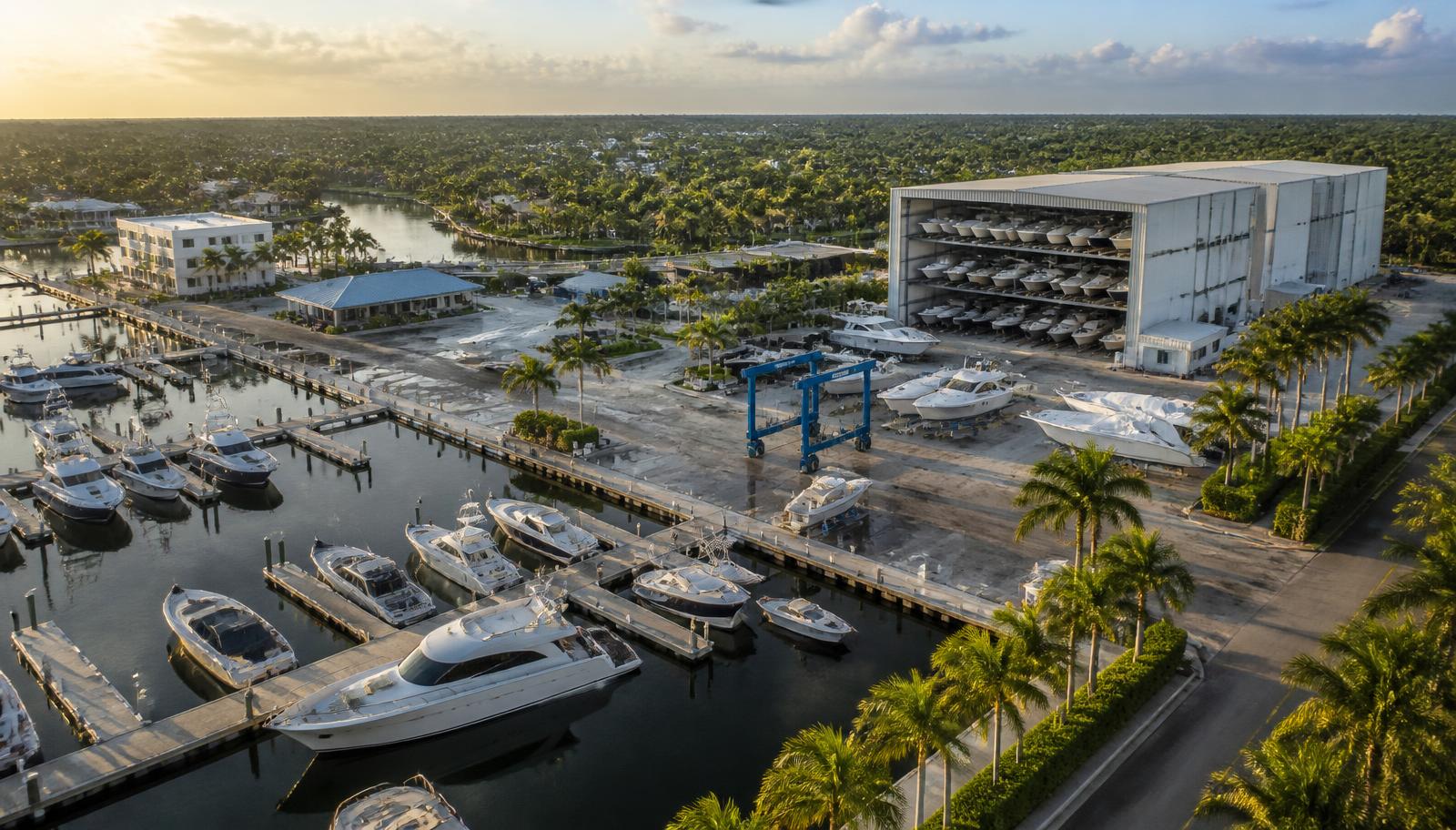
Spanning the coastal corridors of Fort Lauderdale, Miami, and the Florida Keys, South Florida is widely recognized as a major yachting and recreational boating market. For decades, owning a commercial marina, dry stack storage facility, or boat repair yard has been one of the more attractive strategies for capturing coastal cash flow and long term real estate appreciation.
Operating a commercial marine facility here today, however, means navigating real operational friction. Independent owners and legacy families are caught between rising coastal windstorm insurance, Florida Department of Environmental Protection requirements, and complex submerged land lease management. When a marina owner reaches a strategic turning point, whether preparing for retirement, avoiding a costly seawall replacement, or planning a 1031 exchange into a passive Triple Net asset, understanding how institutional acquisition groups underwrite marine real estate is essential to securing a fast, off market cash exit.
The Localized Headwinds Squeezing Florida Marina Owners
Demand for wet slips and dry stack storage remains strong in many South Florida submarkets, yet the baseline overhead required to operate a compliant marine facility continues to compress Net Operating Income.
1. Extreme Coastal Insurance and Submerged Land Lease Liabilities
The most severe local pressure facing coastal marina owners is the sharp rise in commercial marine and windstorm insurance premiums. Older marinas with aging wooden docks or dry stack structures built to earlier wind standards often face difficult insurance underwriting. Many commercial marinas also operate, depending on the property and its submerged land rights, on sovereign submerged land leases administered by the state. Managing renewal, environmental compliance, and fee escalations on a Florida sovereign submerged land lease creates meaningful administrative overhead.
2. Environmental Audits and Fuel Dock Compliance
Commercial marine facilities face close regulatory oversight from the Florida Department of Environmental Protection, the United States Coast Guard, and the Army Corps of Engineers. Requirements depend on facility operations and applicable regulation, but operating a marine fuel dock, bottom painting yard, or vessel repair facility generally calls for careful attention to clean vessel standards, containment protocols, and pump out obligations. Retrofitting an older fuel system or remediating historical basin contamination can require unbudgeted capital expenditures that erase years of operating profit.
3. Slip Management and Seasonality Friction
Running a multi slip wet marina or dry stack facility takes constant operational oversight. As Jason details in Why Most Businesses Fail Before They Even Start, a business without rigid operational systems tends to break down. For independent operators without automated digital reservation systems, handling transient dockage, seasonal tenant turnover, utility bill backs, and hurricane evacuation protocols becomes a full time job.
How Institutional Capital Underwrites Marine Real Estate
When private equity firms, marina syndicators, and direct corporate cash buyers evaluate a South Florida commercial marina, they underwrite the asset with marine specific metrics: linear dockage yield, fuel margin optimization, and physical seawall integrity.
1. Linear Foot Yield and Rack Rent Optimization
Institutional buyers do not underwrite marinas on gross acreage alone. They measure revenue generated per linear foot of wet slip space and per dry stack rack slot. Buyers review trailing twelve month dockage revenue and look for opportunities to upgrade power pedestals, such as adding three phase power for larger yachts, in order to support higher per foot rental rates.
2. Physical Feasibility and Seawall Audits
Corporate buyers do not take a pro forma spreadsheet at face value. As shown in This Property Looked Like a Deal Until We Got There, thorough physical due diligence matters. In marine real estate, the condition of the concrete seawall, pilings, and travelift piers drives the true value of the asset. If a marina needs a near term seawall replacement or dock overhaul, buyers will quantify that work and may account for it directly in pricing:
3. Stress Testing Real NOI and Food and Beverage Synergy
As highlighted in What Is a Cap Rate? Running the Numbers on Three Fort Myers Warehouses, asking prices have to line up with the math. Institutional buyers strip out personal owner expenses and normalize management fees. If the marina includes an underutilized waterfront restaurant or retail space, buyers will also underwrite the upside of leasing that space to an established operator to create an additional Triple Net income stream. Owners who want to test their own numbers can start with our cap rate calculator.
Underwriting complex marine assets takes discipline. Following the framework in The Discipline Loop: Why Your Process Beats Your Goals, corporate buyers hold to their risk thresholds and will walk away when environmental or submerged land issues threaten capital safety.
Bypassing Escrow Friction with a Direct Cash Sale
When an independent owner decides to liquidate a commercial marina or boat yard, the transaction vehicle largely determines the speed and confidentiality of the deal.
Public marketing alerts your dockmaster, mechanics, and long term slip tenants that the property is changing hands, which can prompt key staff to leave or boaters to relocate to competing basins. Buyers relying on conventional commercial bank loans also face longer underwriting timelines. Many lenders apply additional scrutiny to marine assets because of submerged land complexities, hurricane exposure, and potential water contamination. A Phase One environmental assessment may lead to further investigation, including Phase Two water and sediment testing, which can stall an approval or lead a lender to reduce, delay, or decline financing late in the escrow window.
Executing a direct off market sale to an established corporate cash buyer can reduce that financing related execution risk. Private acquisition groups use dedicated, discretionary cash pools, allowing them to purchase commercial marinas as is, taking on deferred seawall maintenance, environmental indemnifications, and submerged land lease assignments. This model bypasses conventional bank financing contingencies, may avoid negotiated brokerage commissions, and can support a faster, more confidential closing timeline. For a deeper breakdown of private transactions, see our master guide on selling commercial property off market.
Plan a Confidential Marina Exit
To see how corporate buying groups analyze your marina yield under current South Florida market parameters, run your figures through our interactive cap rate calculator. If you are tired of managing dock repairs and want a direct corporate cash evaluation, Submit a Property to our acquisition team for a confidential review.
Related Reading
This article is provided for general informational purposes only and does not constitute legal, tax, environmental, accounting, investment, appraisal, or brokerage advice. Insurance, submerged land, and environmental obligations vary by site, agency, lease structure, and use history. Every transaction is subject to underwriting, due diligence, title, documentation, and final approval on the specific property.