
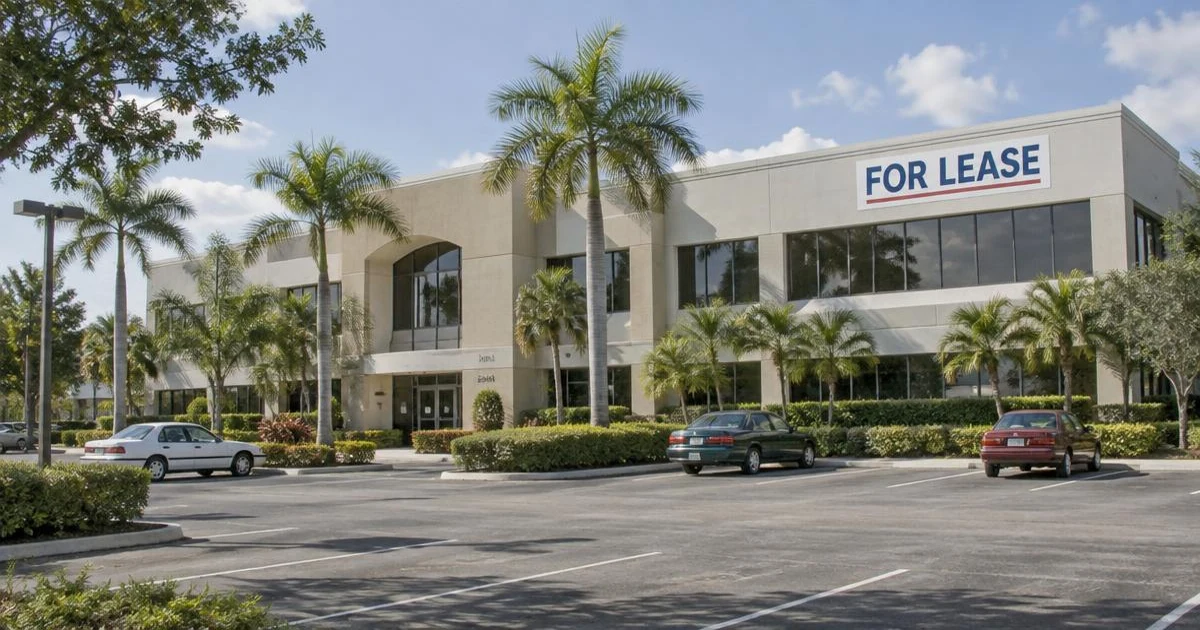
Asset Liquidation & Dispositions
Liquidation and Adaptive Reuse Strategies for Distressed Suburban Office Parks in South Florida
How vacancy, maturing debt, medical-conversion feasibility, and deferred maintenance shape a distressed office disposition.
For many years, suburban Class B and Class C office properties in South Florida generated steady rental income for local owners and syndicators. In submarkets such as Cypress Creek, Plantation, and Boca Raton, local law firms, accounting practices, and logistics brokerages supported multiyear leases and consistent Net Operating Income (NOI).
Hybrid and remote-work patterns have changed tenant space needs across many suburban office markets. As legacy leases expire, some owners face higher vacancy and weaker renewal activity in some office submarkets. Performance varies by location, building quality, amenities, and tenant mix. Some office owners also face refinancing pressure as shorter-term loans reach maturity under different interest-rate and valuation conditions.
For an owner balancing an underoccupied office building and an approaching balloon payment, understanding how redevelopment-oriented buyers evaluate adaptive reuse can help frame a disposition strategy. That analysis is different from underwriting a stabilized office investment, but it does not guarantee a premium price or a rapid closing.
1. The Valuation Pressure and the DSCR Trap
Income-based commercial valuation commonly capitalizes NOI. Illustrative occupancy example: an office building moves from 90% occupancy to 50% occupancy. If occupancy falls materially, NOI can decline while many fixed operating costs remain. Property taxes, insurance, and essential building services do not necessarily fall in proportion to lost rental income. Lease reimbursements, collections, concessions, and operating expenses all affect the result. Fifty percent occupancy does not by itself mean negative NOI.
Lower occupancy and negative or weak cash flow can materially reduce an appraiser's income-based valuation and lender proceeds. The physical improvements may still retain value, and land, comparable sales, condition, and potential alternative uses may also matter. For a starting point on income-based analysis, use our cap rate calculator, recognizing that a capitalization-rate calculation alone does not capture redevelopment feasibility.
Debt Service Coverage Ratio (DSCR) compares property cash flow available for debt service with required debt payments. Lower NOI can reduce DSCR and make refinancing more difficult. Lender thresholds, reserve requirements, loan structure, collateral, and sponsor strength vary. A half-empty property does not automatically fail every lender's underwriting, although weaker income may reduce refinance proceeds or require additional equity.
If a balloon loan reaches maturity without payoff, refinance, extension, or another resolution, a maturity default may occur. DSCR weakness is not the same as an immediate maturity default before the contractual due date, although a separate covenant breach may have consequences under the loan documents. Owners should assess the payoff gap and available resolutions early with their lender and qualified advisers.
2. Institutional Underwriting: Adaptive Reuse and Medical Conversions
Redevelopment-oriented buyers may place greater emphasis on land value, zoning, parking, building configuration, location, replacement cost, and adaptive reuse potential, while still considering current rent roll and operating performance. Existing tenants, lease expirations, termination rights, and occupancy can affect carrying costs, conversion timing, and possession.
Population growth and demographic shifts can support healthcare-service demand in parts of South Florida. The Florida Department of Health's FLHealthCHARTS Population Dashboard provides population and age-profile data for demographic analysis. Population data alone do not establish local medical-office demand. Buyers still need to evaluate healthcare providers, competing facilities, patient access, achievable rents, and the intended service area.
Where zoning, parking, access, utilities, structural capacity, life-safety requirements, and market demand support it, an office property may be evaluated for medical or clinical use. A structurally sound single-story or low-rise office building may offer a starting point, but conversion suitability is property-specific.
- Certain medical uses may require structural, electrical, shielding, HVAC, plumbing, accessibility, or life-safety upgrades depending on the intended clinical use. Imaging equipment is one possible consideration, not a universal requirement.
- HVAC requirements may differ materially for medical uses depending on occupancy classification, infection-control needs, ventilation standards, and local code.
- A successful medical-office repositioning may improve tenancy and operating performance, but results depend on execution, leasing demand, capital costs, and market conditions. Conversion does not automatically create a Class A facility or credit tenancy.
Where the existing improvements are functionally obsolete, buyers may underwrite the property partly or primarily based on underlying land value and redevelopment potential. Potential redevelopment uses may include multifamily, self-storage, medical, mixed-use, or other uses where zoning, land-use rules, parking, density, infrastructure, and entitlement conditions allow. The existing structure is not always ignored, and demolition or redevelopment approval is not assured.
The source's simplified residual-value framework can be expressed as:
Residual Office Land Value = Future Adaptive Reuse Value − (Medical Retrofit CapEx + Zoning Entitlement Risk)
This is a conceptual starting point, not an appraisal formula or guaranteed purchase price. The entitlement-risk term represents an estimated monetary allowance or discount, not a probability subtracted from dollars. A complete model also considers carrying costs, financing, leasing, demolition where needed, contingency, timing, transaction costs, and the buyer's required return.
3. Deferred Maintenance and HVAC Lifespans
Cash-flow pressure can lead some owners to defer nonessential capital projects or maintenance. Roof replacement, parking-lot repaving, and aging commercial HVAC equipment can become competing demands on limited reserves. Deferral is not inevitable, and essential maintenance and safety obligations should not be treated as discretionary simply because occupancy is weaker.
Illustrative equipment scenario: a 25-year-old central chiller fails during a South Florida summer. Age alone does not establish remaining useful life or predict failure. Condition, maintenance records, service history, controls, and equipment type matter. Major HVAC failures can disrupt operations and create tenant, lease, habitability, or service-level issues depending on the lease terms and circumstances. They do not automatically establish constructive eviction or a right to stop paying rent.
Commercial chiller replacement can require substantial capital, with cost varying by tonnage, equipment, controls, access, labor, electrical work, and building configuration. An owner should obtain property-specific engineering advice and contractor estimates rather than assume a standard replacement cost. Unexpected capital expenditures can further pressure liquidity and property performance, particularly when refinancing proceeds are already constrained.
4. Evaluating a Direct Sale of a Distressed Office Property
A distressed office property may require specialized marketing, pricing, and buyer targeting. High vacancy, deferred maintenance, or negative cash flow can reduce lender appetite or loan proceeds and may increase equity requirements. Some properties may have limited conventional financing options in their current condition. Financing uncertainty can increase execution risk and extend the closing process, but it does not mean every financed buyer will be rejected.
Visible distress, deferred maintenance, or uncertainty around ownership can affect tenant confidence and leasing activity in some situations. Listing a property does not itself cause tenants to refuse renewals. Owners should weigh buyer qualifications, capital availability, diligence requirements, and closing conditions rather than assume one marketing channel is always safer.
As a broader business-planning reference, Why Most Businesses Fail Before They Even Start reinforces the importance of recognizing constraints before committing to an exit strategy. In a property sale, understanding the buyer's financing dependencies is one practical part of that planning.
A direct sale to a buyer with available capital can provide an alternative disposition path. Some buyers may accept greater vacancy, property-condition, or redevelopment complexity than conventional owner-users, subject to diligence and negotiated terms. Risk allocation depends on the purchase agreement, due diligence, title, environmental review, zoning, representations, indemnities, and closing conditions. A buyer does not automatically assume every maintenance liability or entitlement risk.
Following the process discipline discussed in The Discipline Loop: Why Your Process Beats Your Goals, owners can compare net proceeds, timing, certainty, and remaining obligations across potential transactions. Brokerage commissions and transaction costs are negotiated and vary. A direct transaction may allow for a more controlled marketing process when appropriate confidentiality agreements are used.
A maturity default may increase enforcement risk, which can include workout negotiations, default interest, foreclosure, or receivership depending on the loan documents, applicable law, and lender actions. Neither receivership nor a direct-sale resolution is automatic. For a broader disposition framework, explore our guide to selling commercial property off market.
If you are evaluating the sale of a distressed or underperforming office property in South Florida, Submit a Property for a confidential acquisition review.
Related Reading
This article is general educational information, not legal, tax, lending, or investment advice. Occupancy and equipment scenarios are illustrative. Valuation, financing, medical conversion, zoning, lease remedies, and transaction outcomes depend on the property, agreements, and applicable law. Consult qualified counsel, engineers, and advisers before acting.