
Asset Liquidation & Dispositions
Liquidation Strategies for South Florida Aging Suburban Office Buildings
How cash buyers evaluate aging Class B and C suburban office buildings through adaptive reuse, covered land plays, and functional obsolescence, and what that means for owners weighing a direct sale.
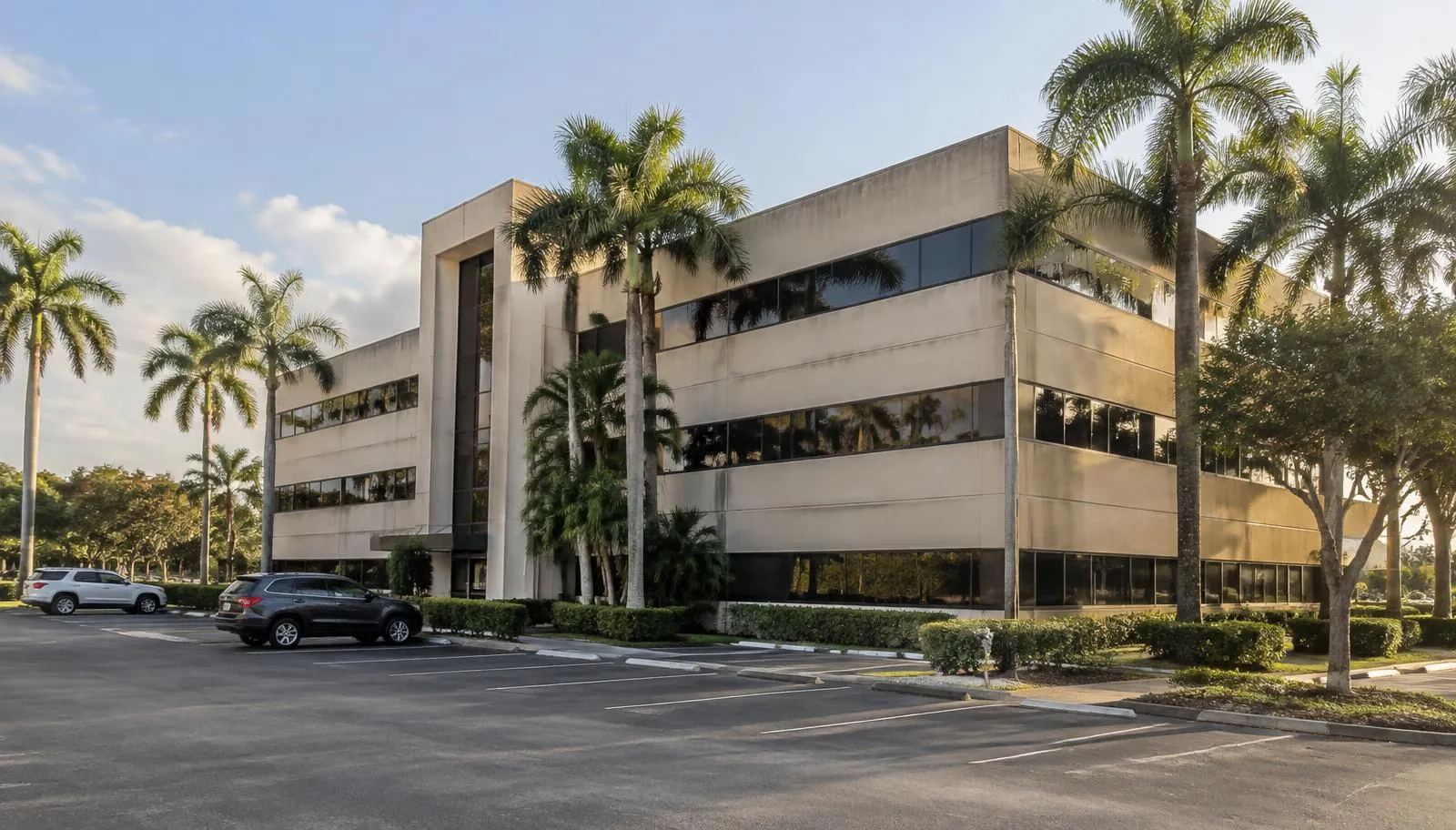
South Florida's office market has increasingly favored newer, well-located Class A buildings, while some older suburban properties face higher vacancy, capital needs, and leasing pressure. Performance has diverged significantly by building quality, location, amenities, tenancy, and submarket. For many owners of aging Class B and C office parks in secondary corridors across Broward and Palm Beach counties, the picture looks very different from the urban cores.
Independent landlords of 1980s and 1990s office stock can find themselves squeezed from several sides at once: persistent vacancy, functional obsolescence, and rising windstorm insurance costs. When a legacy owner reaches a point of management fatigue, understanding how institutional developers and cash buyers underwrite adaptive reuse and covered land plays is essential to evaluating an off-market exit.
The Localized Headwinds Squeezing Florida Office Owners
While national headlines often focus on downtown high-rises, much of the pressure sits with suburban mid-rise assets that struggle to compete for corporate tenants.
The Flight to Quality
Some occupiers are consolidating into newer or better-amenitized buildings, creating additional competitive pressure for older suburban inventory. Tenants seeking modern systems, stronger amenities, and better locations may look to newer space in markets such as Fort Lauderdale and West Palm Beach. For an older building, sustained vacancy can steadily draw down landlord cash reserves.
Functional Obsolescence
Older office properties may require substantial modernization depending on building systems, layout, tenant requirements, and intended use. Common issues include low ceiling heights, inefficient floor plates, aging HVAC equipment, and layouts that no longer match how tenants use space. Illustrative major-renovation scenario only: a full retrofit of systems and common areas can reach seven figures, a cost some independent landlords cannot justify against the rent the building can realistically achieve.
The Windstorm Insurance Trap
Many South Florida commercial property owners have faced substantial insurance-cost pressure in recent years. Lease structure determines how much of an increase in taxes, insurance, and operating expenses can be passed through to tenants. Under gross leases, or Triple Net (NNN) leases with expense caps, a landlord may absorb a meaningful share of the increase, depending on the actual lease language. That can compress Net Operating Income (NOI) and turn a cash-flowing asset into a growing burden.
How Institutional Capital Underwrites Distressed Office Dirt
When private equity developers and direct cash buyers evaluate an aging South Florida office building, they may look past a capitalization rate based on the current rent roll and instead underwrite the asset as a covered land play or a candidate for adaptive reuse. Adaptive reuse involves repositioning an existing building for a new or substantially different use, subject to zoning, design, construction feasibility, market demand, and regulatory approvals. Potential uses may include multifamily, medical, or mixed-use space.
Not every suburban office property is suitable for conversion. Conversion feasibility depends on both physical design and regulatory constraints, including zoning and land-use rules, parking, floor depth, structural grid, plumbing, utilities, life safety, accessibility, building code, density, entitlement, and overall economic feasibility.
Adaptive Reuse Valuation
A value-add buyer may model a potential stabilized value under an alternative use, then account for renovation costs, carrying costs, entitlement risk, financing, timing, and execution uncertainty. Structural retrofitting, rezoning, and architectural redesign can all weigh heavily on what a buyer is willing to pay today.
Covered Land Play
A covered land play is a property where the existing improvements may provide interim income while a buyer evaluates longer-term redevelopment potential. Land value may be influenced by existing zoning, permitted density, future land-use designation, entitlement potential, assemblage opportunities, and redevelopment costs. Theoretical maximum density is not the same as achievable density. Remaining tenants can help offset holding costs and property taxes while the buyer pursues any required zoning, entitlement, demolition, site-plan, or redevelopment approvals, none of which is guaranteed.
A simplified framework some buyers use as a starting point:
As-Is Acquisition Value = Future Redevelopment Value − (Demolition Costs + Entitlement Risk Discount)
In practice, buyers typically layer in additional costs, financing assumptions, and required returns. As discussed in This Property Looked Like a Deal Until We Got There, property-condition and development due diligence may identify structural, mechanical, environmental, leasing, or entitlement issues that affect pricing. Identified risks may influence acquisition pricing, contingencies, reserves, closing conditions, or the buyer's required return.
Bypassing Escrow Friction with a Direct Cash Exit
A highly vacant or functionally obsolete office property may face additional financing and execution challenges. Bank-financed acquisitions may require more time for underwriting, appraisal, property-condition review, environmental diligence, and closing. Illustrative conventional financing timeline: roughly ninety days from contract to close is not unusual for some bank-financed deals. Illustrative distressed-office scenario: at 40% vacancy with aging HVAC, high vacancy can reduce debt capacity and make conventional acquisition financing more difficult, which can stall an escrow.
A direct buyer that is less dependent on acquisition financing may provide another disposition path, subject to diligence and negotiated transaction terms. Some private acquisition groups deploy discretionary capital and may consider buying distressed office properties in their current condition. Responsibility for environmental matters, tenants, entitlements, deferred maintenance, and other property conditions depends on diligence and the negotiated purchase agreement. As shown in Private Money Lending: 3 Deals, 3 Answers, flexible capital can help buyers move on properties that conventional lenders may pass on. Brokerage commissions and transaction costs are negotiated and vary by transaction, and a direct sale can also support a more private process.
For a broader look at how this compares with other distressed formats, see our guides to liquidating South Florida retail strip centers and shopping plazas and marinas and commercial waterfront properties.
To evaluate how buyers may analyze your office building's adaptive reuse potential, test your figures in our interactive cap rate calculator. If you are weighing an exit from a suburban office property and want a confidential acquisition evaluation, Submit a Property to our direct acquisition team. For an in-depth breakdown of private transaction structures, explore our guide on selling commercial property off market.
Related Reading
This article is general educational information and does not constitute legal, tax, lending, or investment advice. Figures and scenarios are illustrative. Zoning, entitlement, insurance, lease, and transaction outcomes vary by property and agreement. Consult qualified advisers before acting on any sale or redevelopment.