
Asset Liquidation & Dispositions
Liquidation Strategies for South Florida Marinas and Commercial Waterfront Properties
How seawalls, environmental risk, and submerged land leases shape marina value, and how buyers underwrite a South Florida waterfront sale.
Along the coastal corridors from the Miami River through Fort Lauderdale and West Palm Beach, commercial marinas and working waterfront properties are some of the region's scarcest real estate. South Florida's limited navigable waterfront and active boating economy can support strong demand for well-located marina assets, although operating performance varies by location, infrastructure, occupancy, lease structure, and property condition.
Operating a commercial waterfront facility today also demands constant attention to environmental compliance and structural maintenance. Many independent marina owners face rising costs from aging seawalls, environmental oversight, and coastal windstorm insurance. For a long-time owner considering an exit, understanding how buyers underwrite submerged land leases and environmental risk can help in preparing for an off-market sale. If you plan to sell a marina in South Florida, the sections below explain what buyers typically examine.
The Localized Headwinds Squeezing Florida Marina Owners
Demand for boat storage remains strong in many South Florida markets, but the physical and regulatory carrying costs of an aging commercial marina can erode Net Operating Income for independent owners.
1. Seawall and Bulkhead Degradation
Commercial marinas are exposed every day to saltwater, tidal movement, and vessel wake. Over decades, the steel tie-backs that support concrete seawalls can corrode and fail, which can lead to bulkhead damage or collapse. Major seawall or bulkhead work can require substantial capital, particularly when engineering, permitting, demolition, marine access, and structural replacement are involved. Depending on the scope and location of the work, marina improvements may require local, state, and federal permits, including environmental or navigational approvals. As an illustrative example only, a large unbudgeted seawall replacement can run into seven figures, which can absorb years of operating profit for an independent operator.
2. Environmental Contamination and Fuel Systems
Working waterfronts often have an industrial side. Marinas and working waterfronts may present environmental risks associated with fuel storage, vessel maintenance, historical boatyard operations, stormwater, soil, or groundwater conditions. Bottom paint, fiberglass dust, and engine fluids from boatyard work are common areas of concern. The Florida Department of Environmental Protection (DEP) regulates many of these activities. Responsibility for investigation, remediation, and regulatory compliance depends on the facts, applicable law, permits, ownership history, and agency requirements. Managing that potential exposure is a real source of stress for many long-time owners.
3. Submerged Land Lease Friction
In Florida, the state holds title to sovereignty submerged lands beneath many navigable waters. Many Florida waterfront facilities using sovereignty submerged lands require leases, easements, consents, or other authorization from the state. Requirements vary based on ownership, location, use, dock configuration, and applicable environmental regulations. These state lands authorizations can carry fees, compliance obligations, and renewal requirements. Material changes to docks or marina operations may require regulatory review or amendment of existing authorizations, and compliance problems can put the wet-slip income that depends on them at risk.
How Institutional Capital Underwrites Waterfront Real Estate
Private equity firms, specialized marina investors, and direct cash buyers evaluating a South Florida commercial marina tend to look closely at the mix of storage revenue, the remaining life of the marine infrastructure, and potential liabilities below the waterline. Specialized marina buyers may adjust capitalization assumptions and valuation methods to account for operating revenue, waterfront scarcity, infrastructure condition, lease rights, environmental risk, and the mix of wet-slip and dry-stack income.
1. Wet Slip versus Dry Stack Yields
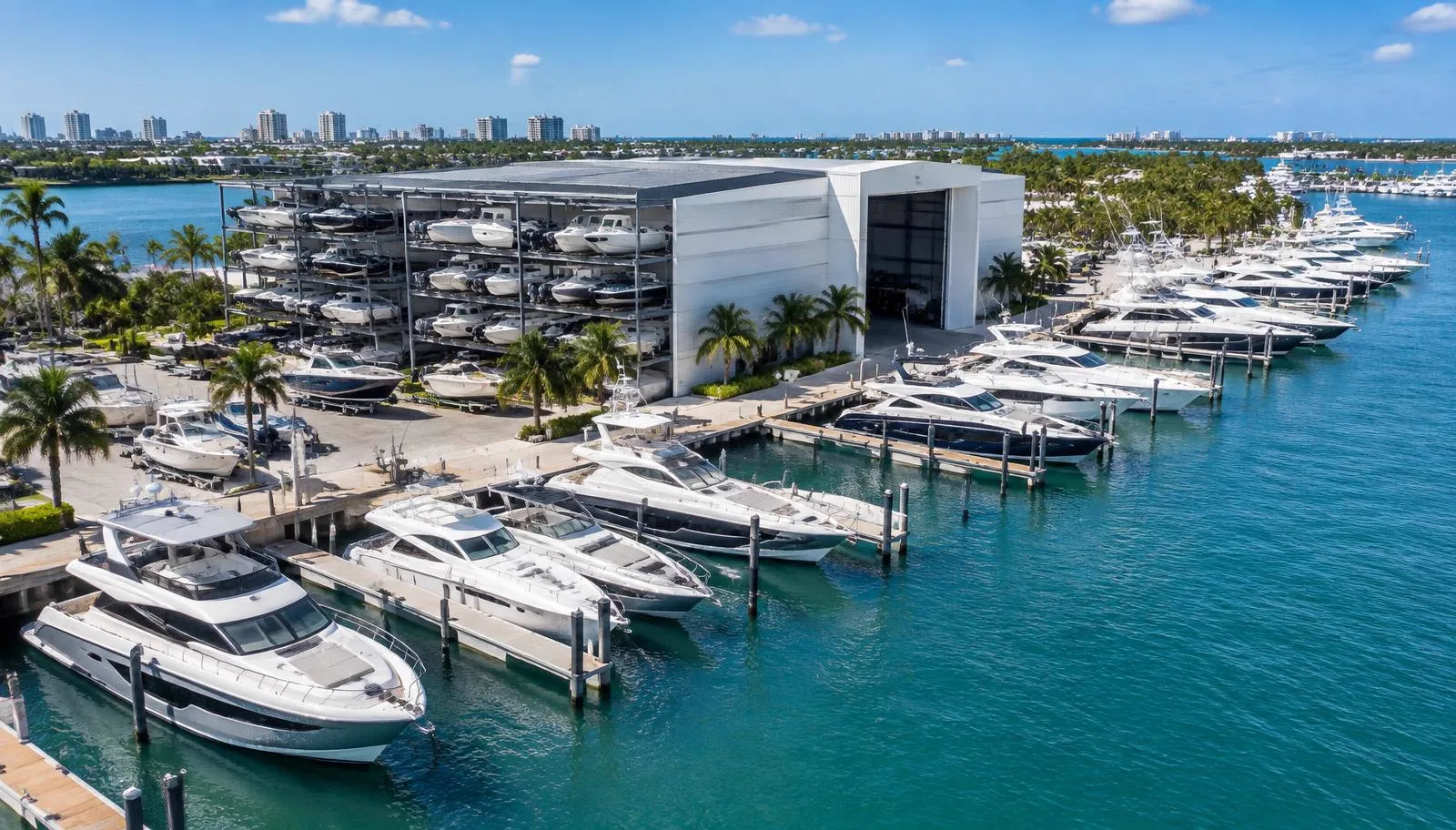
Wet slips can command premium rates, particularly for larger yachts, but may carry significant maintenance and hurricane exposure. Dry stack storage, enclosed steel racks for smaller vessels, can offer dense storage and a different risk profile. Buyers may analyze wet-slip and dry-stack revenue separately because occupancy, pricing, operating costs, storm exposure, infrastructure requirements, and capital needs can differ materially.
2. Phase II Environmental Deductions
Experienced buyers generally verify a broker's offering memorandum rather than relying on it. As demonstrated in This Property Looked Like a Deal Until We Got There, physical due diligence matters. Depending on the findings of initial diligence, buyers may commission additional environmental testing, engineering review, underwater inspections, or a Phase II Environmental Site Assessment. That work can cover soil, groundwater, fuel systems, dock pilings, seawalls, and deferred capital needs.
Identified environmental or capital issues may affect pricing, reserves, escrows, indemnities, closing conditions, or the negotiated purchase agreement. A simplified way to picture the approach:
This is an illustrative framework, not a universal valuation method. Specialized coastal assets call for operational discipline. Following the framework in The Discipline Loop: Why Your Process Beats Your Goals, experienced buyers set clear risk thresholds so their underwriting accounts for the realities of saltwater degradation.
Bypassing Escrow Friction with a Direct Cash Sale
When an independent owner decides to sell a commercial marina, a traditional brokered sale can bring meaningful execution risk. Marina transactions can involve extensive environmental, structural, licensing, lease, and financing diligence. Buyers relying on conventional bank loans may face lengthy underwriting, and some lenders are cautious about older marinas. Environmental findings or a short remaining useful life on a bulkhead can complicate or delay financing, and a broadly marketed sale can create uncertainty for boatyard tenants and slip customers.
A direct buyer using discretionary capital may reduce dependence on acquisition financing and can sometimes accommodate complex property conditions, subject to diligence and negotiated transaction terms. Environmental obligations, deferred maintenance, lease rights, indemnities, and regulatory matters must be addressed in the purchase agreement and applicable agency processes. A direct sale may also reduce or avoid some brokerage costs and can be handled discreetly, depending on how the transaction is structured.
To see how buyers may analyze your marina's yield and infrastructure, test your figures in our cap rate calculator. If you are tired of managing aging bulkheads and want a confidential acquisition evaluation, Submit a Property to our direct acquisition team for a confidential review. For a broader look at private transactions, read our guide on selling commercial property off market.
Related Reading
This article is general educational information and does not constitute legal, environmental, tax, or investment advice. Figures are illustrative. Permitting, lease, and environmental requirements depend on the specific property and applicable law. Consult qualified advisers before any sale.