
Asset Liquidation & Dispositions
Navigating Distressed South Florida Marinas: Liquidation and Waterfront Redevelopment Strategies
How insurance costs, aging marine infrastructure, submerged-land rights, and redevelopment potential shape a distressed marina disposition.
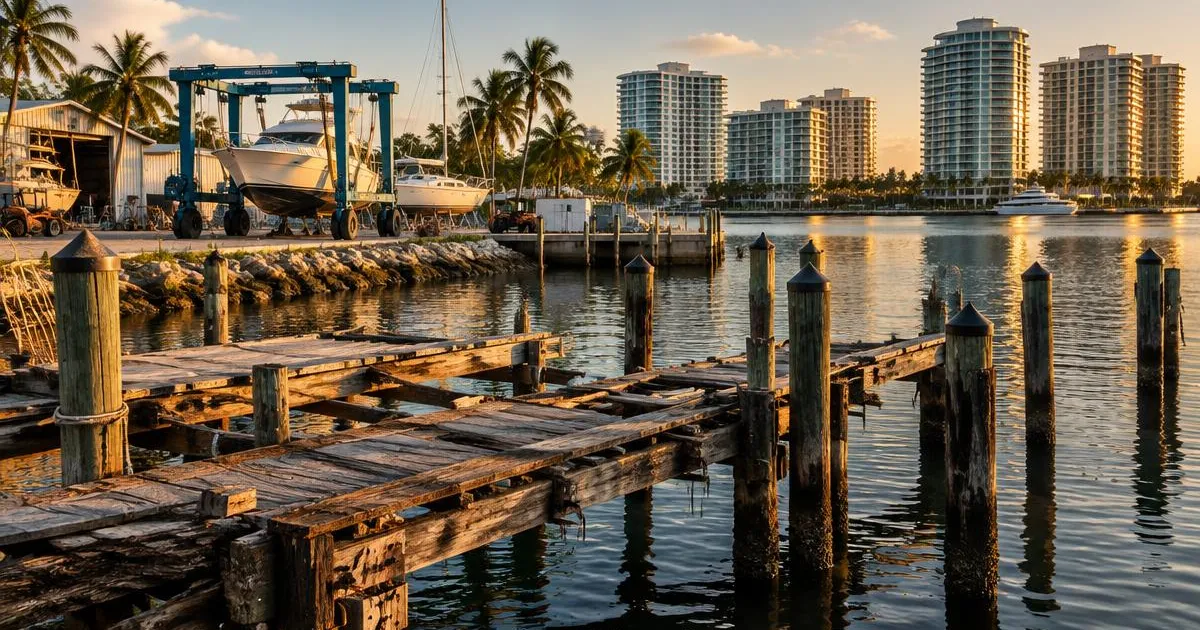
For decades, independent marinas and working waterfront properties across South Florida generated income from wet slips, dry storage, repairs, and related marine operations. Family operators of boatyards along the New River in Fort Lauderdale, the Miami River, and the Intracoastal Waterway in Palm Beach County built businesses around a large regional marine industry.
Some legacy marina operators are facing pressure from insurance costs, aging marine infrastructure, environmental compliance requirements, financing conditions, and significant capital needs. When those pressures combine, a long-held waterfront property can move toward distress.
For an operator whose reserves are being consumed by an aging boatyard, understanding how redevelopment-oriented buyers evaluate waterfront land can help frame a disposition strategy. That analysis is different from underwriting a stabilized marina business, and it does not guarantee a particular price or closing timeline.
1. Environmental, Insurance, and Infrastructure Pressure
Operating a marina differs from managing a standard industrial warehouse. A working waterfront combines heavy marine operations with sensitive coastal and aquatic environments, and the cost of maintaining that combination can be substantial.
Coastal windstorm, liability, and property insurance can represent a significant and volatile operating expense for South Florida marinas. Operators may have limited ability to pass higher insurance and capital costs through to slip tenants without affecting competitiveness or occupancy.
Older waterfront facilities may require substantial capital for seawalls, bulkheads, pilings, docks, electrical systems, fuel systems, and other marine infrastructure. Needs vary by facility, construction, maintenance history, and storm exposure, so each property requires its own engineering assessment.
A fuel release, contamination event, unauthorized work, or other environmental violation can trigger reporting, investigation, remediation, permitting, or enforcement obligations. The Florida Department of Environmental Protection's Clean Marina and Clean Boatyard program outlines best management practices for issues such as paints and coatings, solvents, lubricants, wastewater, stormwater, spill prevention, hazardous materials, and waste management. Environmental remediation costs can be significant, but actual scope and cost depend on the contaminant, affected media, extent of impact, regulatory requirements, cleanup standard, and site conditions. Large environmental or infrastructure obligations can materially pressure an independent operator's liquidity.
Many commercial marina facilities that occupy state-owned submerged lands require an applicable sovereignty submerged lands authorization or lease. According to the DEP's Submerged Lands Management program, sovereignty submerged lands include lands beneath navigable fresh water and tidally influenced waters, and the program handles leases, easements, renewals, modifications, and assignments to new upland owners. Lease terms, conditions, and compliance status differ by facility.
2. Evaluating Highest and Best Use: The Covered Land Play
A redevelopment-oriented buyer may evaluate both current marina cash flow and an alternative highest-and-best-use scenario. Where existing improvements or operations are materially impaired, a buyer may place greater weight on underlying land, entitlement potential, or redevelopment economics. In that case, the marina may be treated partly as a covered land play: the existing operations carry the property while the buyer studies a future use.
Relevant factors can include waterfront location, water depth, access, zoning, submerged-land rights, slip count, upland acreage, environmental condition, infrastructure, redevelopment density, entitlement risk, replacement cost, and current NOI. Navigable water access, channel depth, turning radius, bridge clearance, slip dimensions, and proximity to major waterways can materially affect marina utility and value.
Two potential business plans illustrate the analysis:
- Waterfront residential or mixed-use redevelopment. Where local zoning, comprehensive-plan requirements, density, height, environmental approvals, infrastructure, and municipal entitlements permit, a marina site may be evaluated for residential or mixed-use redevelopment. Rezoning and approvals are not assured. Some projects pair residences with boat slips, and deeded or assigned slips are possible only where local law, submerged-land authorizations, condominium or property documents, and project approvals support that structure.
- Large-vessel repositioning. Some marine facilities may be repositioned for larger vessels through improvements to bulkheads, docks, power, utilities, dredging, access, and related infrastructure. Major marina modernization can require substantial capital, with cost depending on seawall length, dock configuration, utilities, dredging, permitting, environmental conditions, and vessel capacity. Hypothetical example: a buyer budgets roughly $10 million to modernize a facility so it could accommodate vessels up to 200 feet. Actual capacity would depend on berth geometry, depth, turning basin, channel access, bridge clearance, mooring infrastructure, utility systems, and local rules.
The source's simplified residual-value framework can be expressed as:
Residual Waterfront Land Value = Future Redevelopment Value − (Seawall CapEx + Environmental Remediation + Zoning Risk)
This is a conceptual starting point, not an appraisal formula or a guaranteed purchase price. The zoning-risk term represents an estimated monetary allowance or discount, not a probability subtracted from dollars. A complete model also considers dredging, carrying costs, financing, demolition, contingency, timing, transaction costs, and the buyer's required return.
As discussed in This Property Looked Like a Deal Until We Got There, physical diligence can reveal conditions that change the economics of a deal. A buyer should estimate dredging, seawall, dock, environmental, entitlement, and infrastructure costs and reflect those costs in its valuation. How those costs affect price is a matter of negotiation, not a fixed dollar-for-dollar deduction.
3. Financing Challenges for Distressed Marina Assets
Many commercial buyers rely on bank debt to fund acquisitions. Environmental uncertainty, deferred marine infrastructure, lease issues, or weak operating performance may reduce lender appetite or increase diligence and equity requirements. Examples include a deteriorating seawall, a submerged-land lease that needs renewal or modification, or soil impacts from historical boat-bottom painting.
Financed acquisitions can require substantial environmental, property-condition, title, lease, and lender diligence that may extend transaction timing. Highly visible distress or transaction uncertainty can create tenant-management considerations, so sellers may value controlled marketing and confidentiality.
Both brokered and direct-sale strategies may be appropriate. The right approach depends on the asset, buyer universe, confidentiality needs, timing, property condition, and seller objectives.
4. Evaluating a Direct Sale of a Distressed Waterfront Asset
For an operator managing deferred maintenance, rising insurance costs, and submerged-land lease questions, a direct sale to a buyer with available capital can provide an alternative disposition path. Some buyers may accept substantial deferred maintenance or redevelopment complexity, subject to diligence, title, environmental review, permits, and negotiated terms.
Allocation of environmental, infrastructure, lease, and redevelopment liabilities must be addressed through diligence, applicable law, agency requirements, and the purchase agreement. A property transaction involving a sovereignty submerged lands lease may require review of assignment, renewal, modification, or other state authorization requirements.
Following the process discipline discussed in The Discipline Loop: Why Your Process Beats Your Goals, owners can compare net proceeds, timing, certainty, and remaining obligations across potential transactions. Brokerage commissions are negotiated and vary by transaction. A direct transaction may allow a controlled marketing process and can reduce some financing dependencies, but timing and confidentiality remain subject to diligence and negotiated terms.
Additional storm damage, code issues, environmental problems, or capital needs can further affect property value and seller liquidity, which is one reason owners often begin evaluating options early.
To compare the value of current marina operations with other scenarios, you can start with our cap rate calculator, recognizing that a capitalization-rate calculation based on current NOI does not by itself value a redevelopment land play. For a broader view of private transactions, explore our guide to selling commercial property off market.
If you are evaluating a South Florida waterfront or marina property and want to discuss whether it fits Price Capital Group's acquisition criteria, Submit a Property for a confidential review.
Related Reading
- Liquidation Strategies for South Florida Marinas and Commercial Waterfront Properties
- Liquidation and Repositioning Strategies for Functionally Obsolete Warehouses in South Florida
- Selling Commercial Property Off Market: The 2026 Direct Cash Sale Guide for Industrial, Multifamily, and Net Lease Owners
This article is general educational information, not legal, environmental, tax, lending, or investment advice. The modernization example is hypothetical. Insurance, environmental obligations, submerged-land authorizations, zoning, valuation, and transaction outcomes depend on the property, agreements, agency requirements, and applicable law. Consult qualified counsel, engineers, environmental professionals, and advisers before acting.