
Asset Liquidation & Adaptive Reuse
Repositioning Distressed South Florida Big Box Retail: The Last Mile Logistics Conversion Strategy
How anchor vacancy, co-tenancy, conversion economics, zoning, and disposition strategy shape the sale of a vacant South Florida big box retail property.
For decades, big box retail buildings and power centers anchored major South Florida corridors such as US-1, the Palmetto Expressway, and I-95. Many owners relied on long-term leases with national retailers to support stable income.
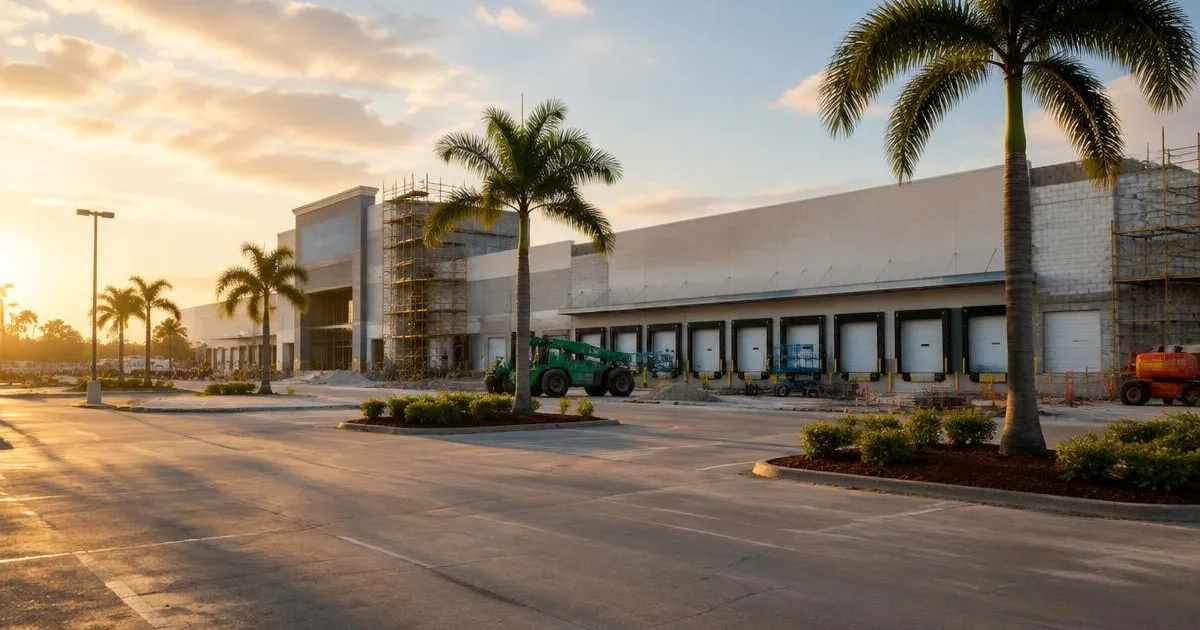
Today, some older big box properties in Miami-Dade, Broward, and Palm Beach counties face a different reality. Changes in shopping behavior, e-commerce growth, and retailer bankruptcies or store closures have left some large-format buildings partially or fully vacant.
When an owner holds a dark big box, re-tenanting with another retailer may be difficult, depending on location, demand, and building condition. Understanding how industrial developers and adaptive-reuse investors evaluate these buildings for last-mile logistics or cold storage can help an owner compare sale and repositioning alternatives. That analysis is property-specific and does not guarantee a particular price, timeline, or outcome.
1. How Anchor Vacancy and Co-Tenancy Can Affect Retail NOI
The effect of a vacant anchor is often not limited to one building. Some retail leases contain co-tenancy provisions that can provide rent relief, substitute rent, or termination rights when specified anchors or occupancy thresholds are no longer satisfied. The exact remedy depends on the lease.
Co-tenancy rights are heavily negotiated. Depending on the lease, they may include:
- named anchor requirements
- minimum occupancy thresholds
- cure periods
- operating requirements
- reduced or substitute rent
- termination rights
Not every in-line tenant has these rights, and an anchor closure does not automatically allow every smaller tenant to terminate or reduce rent. Owners should review each lease to understand which provisions apply and when.
The loss of an anchor can reduce rent, increase vacancy, affect foot traffic, trigger co-tenancy remedies, and reduce Net Operating Income (NOI). Lower occupancy and rent collections can weaken NOI and the Debt Service Coverage Ratio (DSCR). Whether that creates a loan default depends on the mortgage documents and actual financial performance.
A highly vacant retail property can be more difficult to refinance because lenders may underwrite reduced cash flow, lease rollover, property condition, conversion costs, sponsor strength, and the proposed business plan. Owners facing a near-term loan maturity may evaluate refinancing, extension, restructuring, additional equity, asset sale, or other workout alternatives depending on lender requirements and property economics.
2. Evaluating a Retail-to-Industrial Adaptive Reuse
When industrial developers or private investors review a vacant big box in a submarket such as Hialeah or Pompano Beach, some evaluate the building and site for possible conversion to a last-mile distribution facility or, in specialized cases, cold storage. Adaptive reuse is one possible strategy, not the right answer for every vacant big box. Other buyers may pursue retail re-tenanting, mixed-use redevelopment, or other uses.
South Florida's geography, bounded by the Everglades to the west and the Atlantic Ocean to the east, shapes land availability. Large development sites near dense South Florida population centers can be difficult and expensive to assemble, which can make well-located existing retail sites attractive for redevelopment or adaptive reuse.
Many older big box buildings offer large floor plates and substantial parking fields, but clear height, loading configuration, column spacing, slab capacity, and truck circulation vary materially by property. Some older buildings have clear heights in the twenty-to-twenty-four-foot range, which may be below the preference of some modern warehouse users.
Existing parking areas may provide redevelopment flexibility, but truck circulation, turning radii, loading positions, drainage, setbacks, landscaping, traffic impacts, and municipal approvals must be evaluated.
A buyer considering an industrial conversion typically evaluates zoning, future land use, truck access, loading positions, clear height, column spacing, floor loading, building depth, fire protection, power capacity, utilities, stormwater, parking, neighboring uses, traffic, noise, environmental conditions, roof condition, building code, construction costs, market rents, and industrial tenant demand.
Cold storage is a specialized conversion. Relevant requirements may include refrigeration systems, heavy electrical capacity, insulation, floor treatment, backup systems, loading configuration, fire and life-safety systems, and food-related requirements where applicable. Not every big box can be economically converted to cold storage.
3. CapEx, Zoning, and Site-Planning Requirements
Converting a retail building to industrial use can be capital intensive, because logistics users often need infrastructure that differs from typical retail. Required CapEx depends on the existing building and intended industrial use. Depending on the property, a conversion may involve:
- interior demolition
- new loading doors and dock infrastructure
- slab work to support forklifts or racking
- electrical upgrades
- fire protection improvements
- refrigeration systems for cold-storage use
Not every conversion requires all of these items, and the scope should be confirmed through engineering, construction pricing, and code review.
Local zoning often distinguishes commercial retail from industrial use. A retail-to-industrial conversion may require zoning confirmation, rezoning, conditional-use approval, variances, site-plan amendments, traffic review, or other municipal approvals depending on the parcel and proposed use. A variance is not automatically the correct mechanism.
Approval is not guaranteed. Municipalities may evaluate truck traffic, noise, operating hours, loading, proximity to residences, site access, parking, employment use, the comprehensive plan, the zoning district, and community impact.
4. Evaluating an Off-Market Sale to an Adaptive-Reuse Buyer
An owner can compare a traditional marketed sale with a direct off-market process depending on pricing goals, timing, confidentiality, property condition, and the likely buyer universe. Public brokerage and direct-sale strategies can both be legitimate, and a broadly marketed sale may be appropriate when wide price discovery is the priority.
An industrial developer, adaptive-reuse investor, or private acquisition group may be willing to underwrite vacancy, redevelopment cost, and entitlement risk differently from a conventional retail buyer. These buyers can still require due diligence, title review, environmental review, zoning analysis, property inspections, valuation, investment committee approval, financing, and contract contingencies.
Some buyers may acquire the property substantially as-is, subject to negotiated diligence and contract terms. That does not mean a buyer assumes every environmental, zoning, structural, or legal liability; allocation of risk depends on the contract and applicable law.
A direct off-market transaction can offer greater privacy and potentially reduce financing dependencies where the buyer uses committed capital, but price, timing, diligence, and closing certainty remain transaction-specific.
Following the process discipline discussed in The Discipline Loop: Why Your Process Beats Your Goals, owners can compare net proceeds, timing, certainty, and remaining obligations across potential transactions.
Price Capital Group evaluates South Florida commercial real estate opportunities involving distressed, vacant, transitional, and redevelopment-oriented properties based on location, property condition, existing income, land value, marketability, and potential exit strategy.
To review value based on current income, you can start with our cap rate calculator. A cap rate calculation based on current NOI does not determine adaptive-reuse value, land value, industrial or cold-storage feasibility, zoning approval, or CapEx. For a broader view of private transactions, explore our guide to selling commercial property off market.
If you are evaluating the sale or redevelopment of a vacant South Florida retail property, Submit a Property for a confidential review.
Related Reading
This article is general educational information, not legal, zoning, lending, engineering, or investment advice. Lease rights, loan obligations, conversion feasibility, entitlement outcomes, valuation, and transaction results depend on the property, agreements, municipal requirements, and applicable law. Consult qualified counsel, engineers, and advisers before acting.