
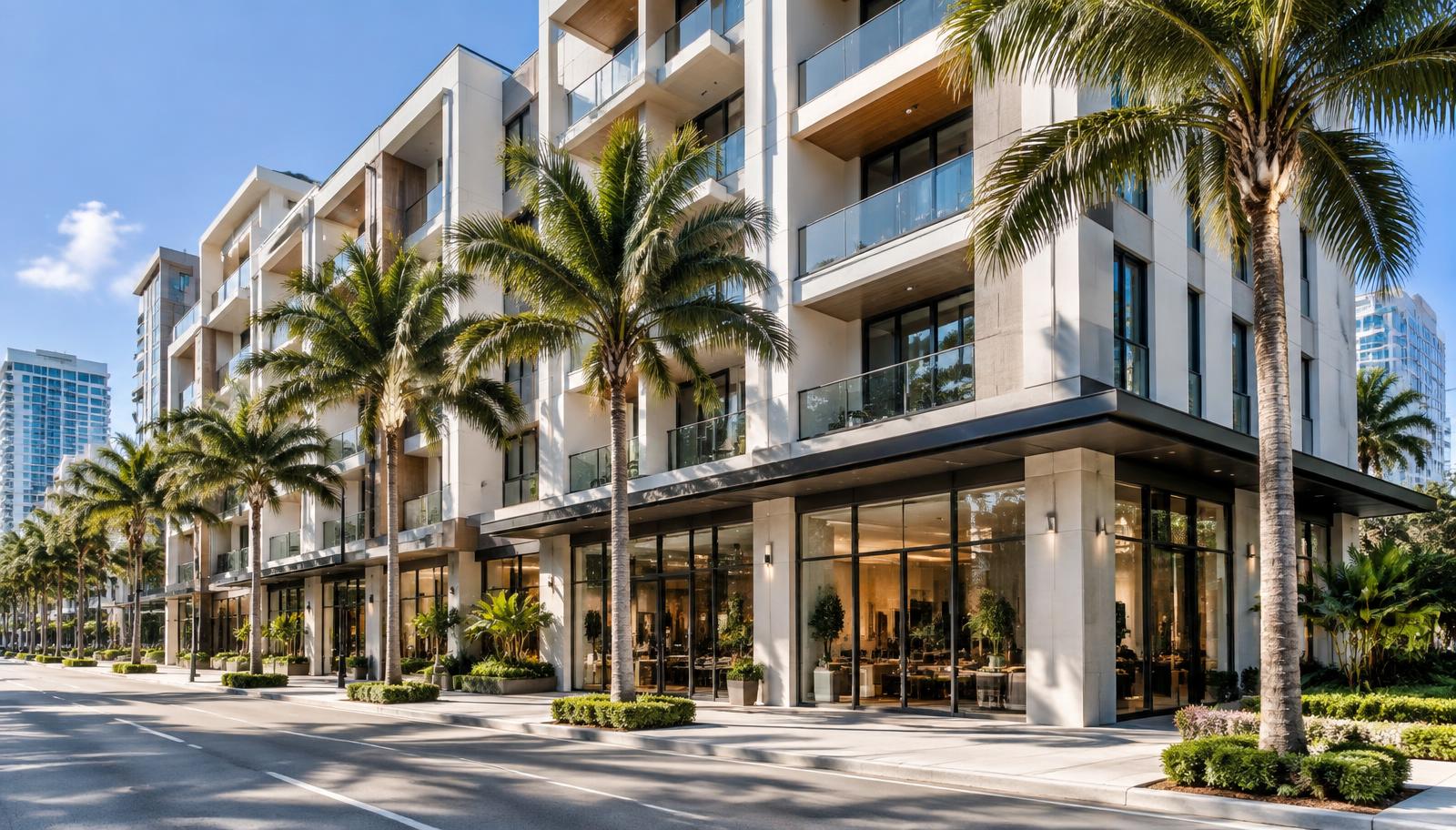
Commercial Property Sales
Liquidation Strategies for South Florida Mixed Use Urban Infill Properties
How institutional and direct cash buyers underwrite South Florida mixed use buildings, from blended cap rates and utility submetering to redevelopment potential.
Across the urban cores of Miami, Fort Lauderdale, and West Palm Beach, mixed use properties have long attracted investors. By combining ground floor retail with upper level residential apartments or boutique office space, owners can spread income across different tenant profiles. If a retail tenant defaulted, residential rent could help cover debt service.
Mixed-use properties can provide diversified income streams, but their operating complexity depends on tenant mix, lease structure, building systems, management, and local market conditions. Operating a mixed use building in South Florida today often means balancing commercial and residential obligations, association matters, and insurance costs across two different occupancy types. For owners weighing a sale, understanding how mixed use property buyers in South Florida underwrite blended cap rates and redevelopment potential can help them evaluate an off-market exit.
The Localized Headwinds Squeezing Florida Mixed Use Landlords
Urban density continues to grow across South Florida, but rising carrying costs can compress Net Operating Income at older mixed use buildings.
1. The Friction of Conflicting Tenant Interests
Mixed-use ownership can require more active management where different uses create competing operational needs. Ground floor restaurants and bars may depend on late-night traffic, frequent commercial trash removal, and substantial kitchen exhaust systems. Upper level residents often expect quiet hours, secure parking, and well-kept common areas. Repeated noise complaints against a key restaurant tenant can put the landlord in a difficult position between lease obligations to both parties. As discussed in Why Most Businesses Fail Before They Even Start, clear operating systems matter. Without a defined process for handling disputes, turnover can rise and weigh on the asset's value over time.
2. Commercial and Residential Insurance Multipliers
Mixed use assets may present more complex insurance underwriting. Residential occupancy can bring life-safety and fire-code considerations, while commercial kitchens and retail spaces can increase general-liability exposure. Insurance costs and underwriting requirements can vary materially based on building age, construction, occupancy mix, location, loss history, and tenant uses. Where residential leases limit the owner's ability to pass through premium increases during the lease term, higher insurance costs can reduce cash flow.
3. Master Association and Parking Allocation Nightmares
In dense neighborhoods such as Brickell or downtown West Palm Beach, older mixed use buildings often have limited parking. Dividing a small footprint between retail customers and residents can lead to towing disputes and tenant frustration. Where a Master Association governs shared elements, approvals and cost allocation can add another layer of complexity to renovations, repairs, exterior modifications, and redevelopment.
How Institutional Capital Underwrites Mixed Use Real Estate
When private equity firms, urban syndicators, and direct corporate cash buyers evaluate a South Florida mixed use building, they often avoid relying on a single generic capitalization rate. Many separate the income streams, test the utility infrastructure, and consider the redevelopment potential of the land.
1. Bifurcating the Cap Rate
Depending on the asset, an underwriter may evaluate commercial and residential income streams separately using risk assumptions appropriate to each component before reconciling them into an overall property valuation. Retail income backed by a well-structured Triple Net lease may be analyzed with one set of assumptions, while residential income, with its management overhead and unit turnover, may be analyzed with another. Lease quality, management burden, and risk profile all shape the result.
Blended Asset Value = (Retail NOI ÷ Retail Cap Rate) + (Multifamily NOI ÷ Multifamily Cap Rate)
Simplified illustrative framework from the source, not a universal method. Actual valuation also reflects lease quality, condition, capital needs, market evidence, and reconciliation with other approaches.
Elevated vacancy in one component of a mixed-use property can materially offset stronger performance in another component. Our cap rate guide explains how component assumptions affect indicated value.
2. Stress Testing Utility Submetering
Buyers typically review the mechanical infrastructure closely. Many older mixed use buildings operate on master utility meters, so the landlord pays the water and electric bills and estimates each tenant's share. As shown in This Property Looked Like a Deal Until We Got There, what a building looks like on paper and what the site visit reveals can differ. Where utility infrastructure limits accurate tenant-level allocation, buyers may account for retrofit costs, recoverability, or operating inefficiencies in their underwriting. Whether separate meters can be installed depends on the building's physical systems, utility provider requirements, and applicable rules.
3. Highest and Best Use Redevelopment
In some prime South Florida urban cores, the land beneath an older mixed use building may support substantially more development than the existing improvements. Where zoning and site conditions support greater density, investors may evaluate redevelopment or covered-land value in addition to existing income. In that case, current rent may help cover carrying costs during planning or entitlement work. The Urban Land Institute publishes research on urban infill and mixed use development that illustrates these density decisions.
Redevelopment is never automatic. It depends on zoning, entitlements, setbacks, parking, utilities, development costs, approvals, and market feasibility. Available zoning capacity does not guarantee that a taller project can be approved or built.
Bypassing Escrow Friction with a Direct Cash Sale
When an independent owner decides to sell a commercial building with apartments in Florida, a traditional listing can work well, but it may also introduce execution risk tied to the buyer's financing.
Mixed-use properties can require more complex underwriting, and lender appetite varies by asset composition and risk. Some lenders are less comfortable when a single loan must cover both residential units and a ground floor restaurant. Utility, association, occupancy, or property-condition issues may complicate financing and extend an escrow period.
A direct off-market sale to an established corporate cash buyer is one alternative. Private acquisition groups with discretionary capital may purchase mixed use buildings as is, pricing tenant, association, and mechanical issues into their offer. Responsibility for liabilities depends on the purchase agreement. Direct capital can reduce financing-related execution risk, may avoid negotiated brokerage commissions, and can support a faster or more defined closing timeline while protecting confidentiality around the active rent roll.
To see how buyers may analyze blended retail and residential yield, test your figures in our cap rate calculator. If you are tired of managing conflicting tenant bases and want a confidential corporate cash evaluation, Submit a Property to our acquisition team for review. For a deeper look at private transactions, read our guide on selling commercial property off market.
Submit a PropertyRelated Reading
This article is provided for general informational purposes only and does not constitute legal, zoning, insurance, appraisal, lending, or investment advice. Outcomes depend on the governing documents, local regulations, and the facts of each property. Consult qualified advisers before selling or redeveloping.